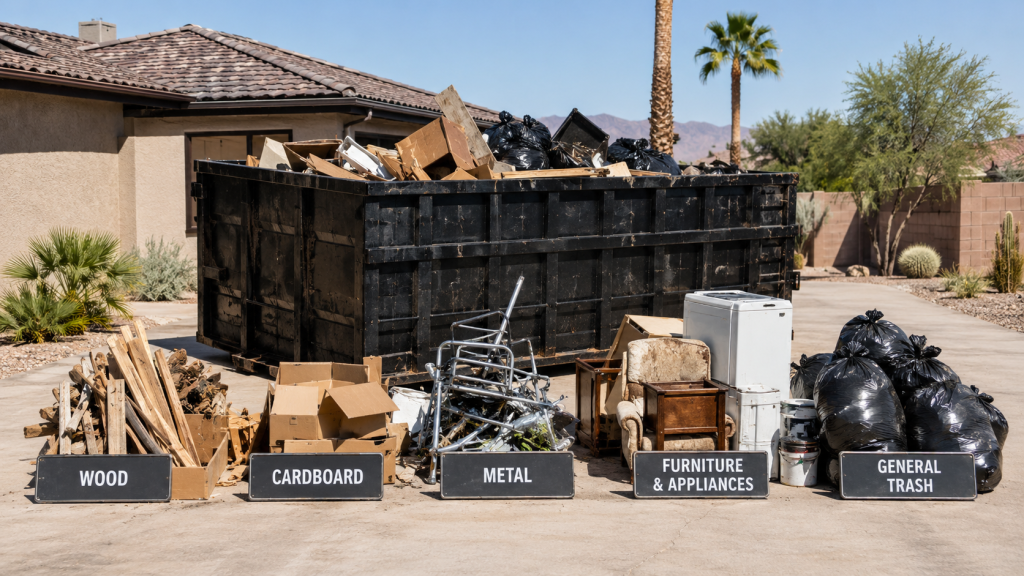
Renting a dumpster is one of the easiest ways to handle a major cleanout, renovation, move, landscaping project, or property cleanup. However, before you start tossing everything into the container, it helps to know how to sort your junk the right way.
That is where junk categorization comes in.
When you understand what type of debris you have, you can choose the right Dumpster Rental in Phoenix, avoid extra fees, prevent pickup delays, and keep your cleanup moving smoothly. Better yet, you can decide what belongs in a dumpster, what should be donated, what may need recycling, and what requires special handling.
This matters because not all junk is the same. Old furniture is different from drywall. Yard debris is different from paint. Electronics are different from household clutter. Construction waste is different from hazardous materials. When everything gets mixed together without a plan, cleanup can become more expensive and stressful than it needs to be.
For homeowners, renters, contractors, landlords, property managers, real estate investors, and business owners in Phoenix, Scottsdale, Paradise Valley, and North Scottsdale, smart junk categorization can make a big difference. It helps you save time, protect your property, and choose between Dumpster Rental and Junk Removal with more confidence.
This guide breaks down the most common junk categories, explains how to sort them, and shows how Junk Gone AZ can help you manage your cleanup from start to finish.
Why Junk Categorization Matters Before Renting a Dumpster
Many people think dumpster rental is simple: rent the dumpster, throw everything in, and wait for pickup. In some cases, that works. However, most projects go better when you categorize items first.
Junk categorization helps you understand what you are removing before you book service. As a result, you can explain your project more clearly and get better guidance from the dumpster rental company.
For example, a garage cleanout with boxes, broken furniture, and household junk may need one type of plan. A bathroom renovation with tile, drywall, cabinets, and flooring may need another. A landscaping cleanup with branches, dirt, rock, and old outdoor materials may require even more careful planning because some materials are heavy.
When you sort debris properly, you reduce confusion and avoid common dumpster rental problems.
It Helps You Choose the Right Dumpster Size
Different items take up space differently. A pile of cardboard boxes may look big, but it can be broken down. A couch may take up lots of room even though it is not extremely heavy. Tile, dirt, concrete, and roofing debris may not look huge, but they can become very heavy fast.
Because of that, knowing your junk categories helps the company recommend the right dumpster size.
It Helps Prevent Extra Fees
Some items may not be allowed in a standard dumpster. Others may require special disposal. If restricted items end up in the dumpster, you could face extra charges or pickup issues.
Categorizing your junk before loading helps you keep questionable items separate until you confirm what is allowed.
It Helps You Decide Between Dumpster Rental and Junk Removal
Dumpster rental is great when you want to load items yourself over time. However, Junk Removal may be better when you have heavy furniture, appliances, office items, or bulky debris you do not want to lift.
Once you know what categories of junk you have, choosing the right service becomes easier.
Dumpster Rental vs. Junk Removal: How Categorization Helps You Choose
Before you begin sorting, think about the kind of cleanup you are doing. The service you need depends on how much debris you have, how heavy it is, and whether you want to load it yourself.
Choose Dumpster Rental When You Have Ongoing Debris
Dumpster rental is usually best for larger projects or cleanups that happen over several hours or days.
It works well for:
- Home renovations
- Garage cleanouts
- Estate cleanouts
- Roofing projects
- Yard debris removal
- Moving cleanouts
- Construction debris
- Rental property turnovers
- Commercial cleanups
With a dumpster on-site, you can load debris as you work. This makes it ideal for projects where junk will build up in stages.
Choose Junk Removal When You Need Labor
Junk removal is better when you want a crew to lift, load, and haul items for you.
It works well for:
- Sofas
- Mattresses
- Appliances
- Office furniture
- Heavy shelving
- Hot tubs
- Bulky garage items
- Apartment cleanouts
- Senior downsizing
- Fast one-time removals
If the job involves heavy lifting, stairs, tight hallways, or items you cannot move safely, full-service junk removal may be the smarter choice.
Some Projects Need Both
Many Phoenix-area cleanups involve mixed junk. You may need a dumpster for general debris and junk removal for large or heavy pieces.
For example, a Paradise Valley estate cleanout may involve boxes, household goods, garage clutter, furniture, and appliances. A dumpster may handle the general debris, while a junk removal crew can handle large furniture and appliances.
Because Junk Gone AZ offers both services, customers can choose the best option for each part of the cleanup.
Category 1: General Household Junk
General household junk is one of the most common categories for dumpster rental. It includes everyday items that have built up over time and no longer serve a purpose.
This category often appears during garage cleanouts, moving projects, downsizing, estate cleanouts, and rental turnovers.
Common Household Junk Items
General household junk may include:
- Boxes
- Old rugs
- Broken chairs
- Damaged décor
- Worn household goods
- Small furniture
- Plastic bins
- Old toys
- Unused kitchen items
- Broken storage shelves
- Non-hazardous clutter
Most household junk is relatively easy to load, although bulky items can take up space quickly.
Sorting Tips
Start by separating items into keep, donate, sell, recycle, and dispose categories. This makes the cleanup more organized and prevents useful items from being thrown away too quickly.
However, do not overthink every item. If something is broken, stained, unsafe, or no longer useful, it may belong in the disposal pile.
A dumpster is helpful because you can load general junk as you sort room by room.
Category 2: Furniture and Bulky Items
Furniture is common during cleanouts, moves, rental turnovers, and office updates. However, furniture can be tricky because it takes up a lot of space.
Common Furniture Items
Furniture and bulky items may include:
- Sofas
- Recliners
- Tables
- Chairs
- Dressers
- Bed frames
- Mattresses
- Bookshelves
- Patio furniture
- Entertainment centers
- Filing cabinets
Some furniture can go in a dumpster, but large pieces may fill the container quickly.
When Junk Removal May Be Better
If furniture is heavy, located upstairs, or difficult to move, junk removal may be safer and faster. A crew can remove items without requiring you to drag them through the house or lift them into a dumpster.
This is especially helpful for senior downsizing, apartment cleanouts, and office furniture removal.
Space-Saving Tips
If you are loading furniture into a dumpster, break down pieces when it is safe to do so. Remove legs from tables, disassemble bed frames, and flatten lightweight shelves. This helps you use the dumpster more efficiently.
However, avoid breaking items with glass, sharp metal, or hidden hardware unless you can do it safely.
Category 3: Construction and Remodeling Debris
Construction debris is one of the biggest reasons people rent dumpsters. Renovation projects create debris quickly, and keeping it contained helps the job site stay cleaner and safer.
Common Construction Debris
Construction and remodeling waste may include:
- Drywall
- Wood
- Flooring
- Cabinets
- Countertops
- Tile
- Trim
- Doors
- Windows
- Insulation
- Roofing materials
- Packaging
- Fixtures
These materials are common during kitchen remodels, bathroom renovations, flooring projects, roofing jobs, and whole-home updates.
Why Categorization Matters
Construction debris can vary in weight. Drywall and wood may be manageable, while tile, concrete, brick, and roofing materials can become heavy fast.
Before renting a dumpster, tell the company what materials you are removing. This helps avoid weight issues and ensures the dumpster is appropriate for the job.
Contractor Cleanup in Phoenix
Contractors in Phoenix, Scottsdale, and North Scottsdale often need fast dumpster rental to keep projects moving. A dumpster gives crews a central place to place debris, which reduces clutter and improves job site safety.
For high-end renovations in Paradise Valley, a clean and well-placed dumpster can also help maintain a more professional property appearance during the project.
Category 4: Yard Waste and Landscaping Debris
Phoenix-area landscaping projects can create a surprising amount of debris. Even a simple yard cleanup can fill a truck quickly.
Common Yard Waste
Yard and landscaping debris may include:
- Branches
- Shrubs
- Palm fronds
- Leaves
- Grass clippings
- Old planters
- Wooden landscape borders
- Outdoor décor
- Fencing pieces
- Small tree debris
A dumpster can be very helpful for larger yard projects because it keeps debris contained and ready for haul-away.
Heavy Landscaping Materials
Some landscaping materials need special attention because they are heavy.
These may include:
- Dirt
- Rock
- Gravel
- Sod
- Concrete
- Pavers
- Brick
- Wet yard debris
These materials can exceed weight limits quickly, even if the dumpster is not full. Therefore, always discuss heavy landscaping materials before loading.
Why Fast Cleanup Helps Curb Appeal
Yard debris can hurt curb appeal if it sits too long. Prompt dumpster rental helps homeowners, property managers, and businesses clear outdoor spaces faster.
This is especially useful before home showings, HOA inspections, landscaping upgrades, or commercial property cleanups.
Category 5: Appliances and Large Household Equipment
Appliances are common during moves, renovations, and property cleanouts. However, they may require special handling depending on the item.
Common Appliance Items
Appliances may include:
- Refrigerators
- Freezers
- Washers
- Dryers
- Dishwashers
- Ovens
- Microwaves
- Water heaters
- Air conditioning units
Some appliances may not be accepted in a standard dumpster, especially if they contain refrigerants or other components that need special disposal.
Ask Before Loading
Before placing appliances in a dumpster, ask the rental company what is allowed. If special handling is required, junk removal may be a better option.
A professional junk removal crew can help move bulky appliances safely and guide you on proper disposal options.
Rental Property Cleanouts
Appliance removal is common for landlords and property managers. If a tenant leaves behind a damaged refrigerator, washer, dryer, or microwave, fast removal can help the unit become rent-ready sooner.
Category 6: Electronics and E-Waste
Electronics are easy to overlook during a cleanup, but they should usually be separated from general junk.
Common Electronics
Electronics may include:
- Televisions
- Computers
- Monitors
- Printers
- Keyboards
- Speakers
- Cables
- Small appliances
- Office equipment
- Entertainment systems
Some electronics contain materials that may require special disposal or recycling. Because of that, they may not belong in a standard dumpster.
Business Cleanout Considerations
Offices and businesses often generate electronics during upgrades. Old monitors, printers, computers, phones, and networking equipment can pile up quickly.
Before loading electronics into a dumpster, confirm whether they are accepted. If not, junk removal may help separate and haul these items appropriately.
Data Safety Tip
Before disposing of computers, phones, tablets, or storage devices, remove personal or business data. Wipe drives, remove memory cards, and handle sensitive information carefully.
Category 7: Hazardous and Restricted Materials
Hazardous materials are one of the most important junk categories to separate. These items usually should not go into a regular dumpster.
Common Restricted Materials
Restricted materials may include:
- Paint
- Solvents
- Fuel
- Oil
- Chemicals
- Pesticides
- Pool chemicals
- Propane tanks
- Batteries
- Tires
- Medical waste
- Pressurized containers
- Liquids
- Hazardous waste
If you are cleaning out a garage, shed, workshop, storage room, or commercial space, you may find these items.
Why These Items Matter
Hazardous materials can create safety risks, fire risks, environmental concerns, and disposal problems. If they end up in a dumpster, pickup may be delayed or extra fees may apply.
The safest approach is to keep them separate and ask for proper disposal guidance.
Garage Cleanout Tip
During garage cleanouts, create a “questionable items” area. Place old paint, chemicals, batteries, automotive fluids, and similar materials there until you confirm how to dispose of them.
This simple step can prevent problems later.
Category 8: Donation-Ready Items
Not everything you remove should go into a dumpster. Some items may still be useful to someone else.
Items That May Be Donated
Donation-ready items may include:
- Clean furniture
- Clothing
- Kitchenware
- Books
- Toys
- Working appliances
- Décor
- Tools
- Office supplies
- Small household goods
Before donating, make sure items are clean, usable, and in good condition. Most donation centers do not want broken, stained, unsafe, or heavily damaged items.
Why Donation Sorting Helps
Donation sorting reduces waste and can make downsizing feel more purposeful. It also helps you avoid filling the dumpster with items that still have value.
However, donation should not slow down the entire cleanup. Set a deadline for donation items so they do not sit in piles for weeks.
When Junk Removal Can Help
If donation-ready items are large or heavy, junk removal may help move them out faster. This is especially useful during estate cleanouts, senior downsizing, or large home transitions.
Category 9: Recyclable Materials
Some cleanup materials may be recyclable, depending on local options and material condition.
Common Recyclable Categories
Potential recyclable materials may include:
- Cardboard
- Paper
- Scrap metal
- Some plastics
- Certain electronics
- Appliances
- Clean wood
- Metal shelving
- Aluminum items
Recycling options vary, so ask before assuming every recyclable item can go in the same container.
Cardboard and Packaging
Cardboard is common during moves, retail cleanouts, office projects, and business deliveries. Breaking down cardboard before disposal saves space and keeps the cleanup more organized.
For businesses with recurring cardboard waste, recurring dumpster rental may help keep storage areas clear.
Scrap Metal
Metal items can be bulky but may have recycling value. During construction, garage cleanouts, or commercial cleanups, separate metal when possible.
This makes it easier to decide whether it should go in the dumpster, be recycled, or be handled through junk removal.
Category 10: Documents, Paperwork, and Personal Items
Paper clutter is common during downsizing, office cleanouts, estate cleanouts, and moving projects. However, paperwork should be handled carefully.
Common Paper Items
Paper clutter may include:
- Old files
- Receipts
- Manuals
- School papers
- Business records
- Personal documents
- Storage boxes
- Office paperwork
Some paper can go in the trash, but sensitive documents should be shredded or handled securely.
Protect Personal Information
Before throwing away documents, check for personal information such as Social Security numbers, bank details, medical records, tax documents, passwords, or business records.
When in doubt, shred sensitive documents before disposal.
Estate Cleanout Tip
During estate cleanouts, sort paperwork slowly. Important documents may be mixed in with ordinary papers, books, or storage boxes.
A dumpster is helpful for general debris, but personal records should be reviewed before loading.
Category 11: Commercial Junk and Business Waste
Businesses often need a more organized approach to junk categorization because waste affects operations, customers, and employees.
Common Commercial Junk
Commercial junk may include:
- Office furniture
- Retail displays
- Packaging
- Shelving
- Old inventory
- Fixtures
- Pallets
- Storage room clutter
- Construction debris
- Warehouse materials
A dumpster can support ongoing or project-based business cleanups. However, junk removal may be better for heavy office furniture, equipment, or fixtures.
Recurring Dumpster Rental for Businesses
Some small businesses generate waste consistently. In those cases, recurring dumpster rental can be more efficient than repeated one-time cleanouts.
This can help retail stores, offices, warehouses, contractors, property managers, and service businesses keep operations cleaner and more organized.
Keep Customer Areas Clear
For commercial cleanups, dumpster placement matters. The container should not block entrances, customer parking, fire lanes, or delivery access.
A reliable local company can help plan placement around the property’s daily needs.
How to Categorize Junk Before Your Dumpster Arrives
A good sorting system can make loading much easier.
Step 1: Walk Through the Property
Before scheduling service, walk through every area that needs cleanup. Check rooms, closets, garages, sheds, patios, yards, offices, and storage areas.
Write down the main categories of junk you see. This helps you explain your project clearly when booking.
Step 2: Create Sorting Zones
Set up simple zones for:
- Keep
- Donate
- Sell
- Recycle
- Dumpster
- Junk removal
- Hazardous or restricted items
This gives everyone helping with the cleanup a clear system to follow.
Step 3: Separate Restricted Items First
Before loading anything, pull out paint, chemicals, batteries, propane tanks, fuel, tires, pool chemicals, and electronics. Keep them separate until you confirm disposal rules.
This prevents accidental loading and pickup delays.
Step 4: Load by Category
If possible, load large items first, then smaller debris. Keep heavy materials low and avoid overfilling the dumpster.
Also, break down items safely when it helps save space.
Step 5: Ask Questions Before Guessing
If you are unsure whether something can go in the dumpster, ask before loading. Guessing can lead to extra work later.
A reliable dumpster rental company would rather answer questions upfront than deal with problems at pickup.
Junk Categorization for Common Phoenix-Area Projects
Different projects create different junk categories. Understanding your project type can help you plan better.
Home Renovations in Phoenix
Renovations often create construction debris, old fixtures, flooring, cabinets, drywall, and packaging. Categorize heavy materials separately from lighter debris so you can discuss weight limits before renting.
Garage Cleanouts in Scottsdale
Garage cleanouts often include household junk, tools, paint, chemicals, old sports equipment, furniture, and storage boxes. Separate restricted items early, especially hazardous materials.
High-End Estate Cleanouts in Paradise Valley
Estate cleanouts may include furniture, documents, donations, appliances, personal belongings, and general debris. Categorization helps families preserve important items while removing unwanted materials efficiently.
Remodeling Projects in North Scottsdale
Remodeling projects may include flooring, tile, cabinets, drywall, wood, fixtures, and outdoor debris. Because many North Scottsdale homes have high-end driveways and landscaping, placement planning is also important.
Red Flags to Avoid When Renting a Dumpster for Mixed Junk
Mixed junk projects require clear communication. If a company does not ask what you are throwing away, that is a warning sign.
No Questions About Materials
A reliable company should ask what type of debris you have. If it does not, the dumpster size, price, or disposal plan may not fit your project.
No Explanation of Restricted Items
The company should explain what cannot go in the dumpster. If it does not, you may accidentally load prohibited materials.
Vague Pricing
Mixed debris can affect weight and disposal costs. A trustworthy provider should explain pricing, rental period, weight limits, and potential extra charges clearly.
No Size Guidance
If you have furniture, construction waste, yard debris, and household junk, size guidance is important. A company that offers no help may leave you with the wrong dumpster.
Poor Pickup Communication
You should know how pickup works before the dumpster arrives. Ask how much notice is needed and whether you can schedule pickup early if you finish ahead of time.
Why Junk Gone AZ Is a Smart Choice for Junk Categorization and Cleanup
Junk Gone AZ helps homeowners, renters, contractors, property managers, landlords, real estate investors, and business owners manage cleanup projects throughout Phoenix, Scottsdale, Paradise Valley, and North Scottsdale.
Because the company offers both Dumpster Rental and Junk Removal, customers can choose the right solution based on the type of junk they have.
Dumpster Rental for Flexible Cleanup
Dumpster rental is ideal when you want to load debris over time. It works well for renovations, garage cleanouts, estate cleanouts, yard debris, moving projects, rental turnovers, and construction waste.
Junk Removal for Heavy or Bulky Items
Junk removal is better when you need help with lifting, loading, and hauling. It is useful for furniture, appliances, mattresses, office items, bulky debris, and cleanouts where speed matters.
Local Guidance That Makes Sorting Easier
Junk Gone AZ understands Phoenix-area cleanup needs. The team can help customers think through debris categories, dumpster placement, timing, and service options.
Whether you are clearing a Phoenix home, remodeling in Scottsdale, managing a Paradise Valley estate cleanout, or handling a North Scottsdale renovation, Junk Gone AZ can help make the cleanup easier.
A clear junk sorting workflow can turn a stressful project into a manageable plan.
FAQs About Junk Categorization for Phoenix Dumpster Rental
What is junk categorization?
Junk categorization means sorting unwanted items by type before disposal. Common categories include household junk, furniture, construction debris, yard waste, appliances, electronics, hazardous materials, donations, recyclables, and commercial junk.
Why should I categorize junk before renting a dumpster?
Categorizing junk helps you choose the right dumpster size, avoid restricted items, prevent extra fees, and decide whether dumpster rental or junk removal is the better option.
What can usually go in a dumpster?
Many dumpsters can accept household junk, furniture, boxes, wood, drywall, flooring, cabinets, yard debris, roofing materials, and general construction debris. However, rules vary, so always ask before loading.
What should not go in a dumpster?
Items such as paint, chemicals, fuel, propane tanks, batteries, tires, pool chemicals, pesticides, liquids, medical waste, hazardous waste, and certain electronics may require special handling.
Is dumpster rental better than junk removal for mixed junk?
Dumpster rental is better when you have a large cleanup and want to load at your own pace. Junk removal is better when you need a crew to lift, load, and haul items for you. Some projects benefit from both.
How should I sort junk during a garage cleanout?
Create piles for keep, donate, sell, recycle, dumpster, junk removal, and restricted items. Pull out paint, chemicals, batteries, and other hazardous materials before loading the dumpster.
Can I put furniture in a dumpster?
Some furniture may be allowed in a dumpster, but bulky pieces can take up a lot of space. If furniture is heavy, upstairs, or difficult to move, junk removal may be easier.
Can construction debris go in a dumpster?
Many construction materials can go in a dumpster, including wood, drywall, flooring, cabinets, and roofing debris. However, heavy materials like tile, concrete, dirt, brick, and stone may require special planning.
How do I know what dumpster size I need?
The right size depends on your junk categories, volume, weight, and project timeline. Describe your materials to the dumpster rental company so they can recommend the best option.
Does Junk Gone AZ offer both dumpster rental and junk removal?
Yes. Junk Gone AZ provides dumpster rental and junk removal services for residential and commercial customers in Phoenix, Scottsdale, Paradise Valley, and North Scottsdale.
Schedule Dumpster Rental for Your Phoenix Home Renovation
A reliable dumpster rental can make junk categorization easier by giving every unwanted item a clear place to go while keeping your cleanup organized and efficient.
Contact Junk Gone AZ for fast, reliable service in Phoenix, Scottsdale, Paradise Valley, and North Scottsdale.