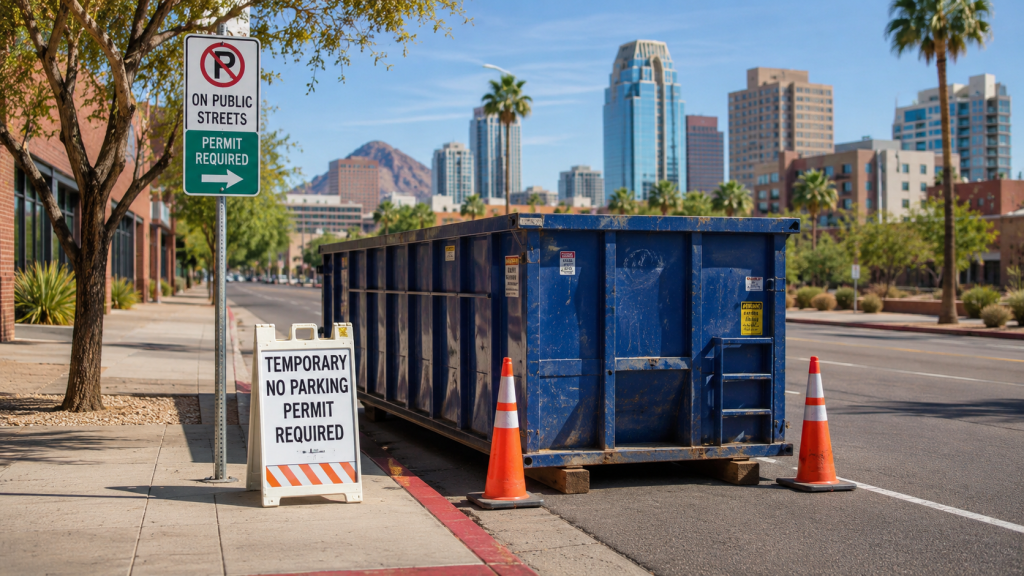
Renting a dumpster can make a renovation, cleanout, roofing job, landscaping project, or construction project much easier. However, placement matters. If the dumpster stays entirely on private property, such as a driveway or private parking area, the process is usually more straightforward. Yet, when a dumpster needs to sit on a public street, sidewalk, alley, bike lane, or another public right-of-way area in Phoenix, permit requirements may apply.
That is why understanding public-street rules before scheduling Dumpster Rental in Phoenix is so important.
A dumpster placed in the wrong location can block traffic, create safety concerns, interfere with pedestrians, or lead to complaints. In some cases, it can also delay your project if the container must be moved after delivery. For homeowners, contractors, property managers, landlords, real estate investors, and business owners, a little preparation can prevent a lot of frustration.
Because local rules can change, you should always confirm current requirements with the City of Phoenix before placing a dumpster in a public area. Still, the general rule is simple: when a dumpster affects public space, you need to check permit requirements before delivery.
A reliable local dumpster rental company can help you think through placement, access, timing, and project needs before the dumpster arrives. This matters because the right plan can save time, reduce stress, and keep your cleanup moving without unnecessary delays.
Why Dumpster Placement Matters in Phoenix
Dumpster rental may seem like a basic cleanup service, but a roll-off dumpster is a large container. Once placed, it can take up curb space, reduce lane width, block visibility, interfere with parking, or affect pedestrian access.
In Phoenix neighborhoods, placement can be especially important because many streets include shared parking, trash collection access, bike lanes, school routes, driveways, and emergency access paths. In commercial areas, poor placement can affect customers, deliveries, employees, and nearby businesses.
For this reason, the question is not only, “Can I rent a dumpster?” The better question is, “Where can the dumpster legally and safely go?”
A reliable local company can help you think through placement before delivery. That matters because choosing the wrong spot can create delays, extra costs, or unnecessary stress.
When You May Need a Permit for Dumpster Rental in Phoenix
You may need a permit or right-of-way approval when a dumpster will occupy or restrict public space. That can include placement on a public street, sidewalk, alley, designated bike lane, parking lane, or other public right-of-way area.
In practical terms, this means a dumpster placed in a public street may need review because it can affect how people move through the area.
Common Situations That May Trigger Permit Questions
You should ask about permit requirements if:
- The dumpster must sit in the street
- The dumpster blocks a sidewalk
- The dumpster affects a bike lane
- The dumpster uses public parking spaces
- The dumpster sits in an alley used by others
- The dumpster narrows a travel lane
- Delivery or pickup requires temporary traffic control
- The project is in a busy commercial area
- The property has no driveway or private placement option
Even if the placement feels minor, it is better to check first. A short call can prevent a larger issue later.
When a Dumpster Permit May Not Be Needed
If the dumpster can fit fully on private property, the permitting process is usually simpler. For example, many homeowners place dumpsters in a driveway, on a private parking pad, or inside a job site area that does not affect public access.
However, “private property” should be clear. A driveway apron, sidewalk, alley, or curb lane may be considered part of the public right-of-way even if it sits directly in front of your home or business.
So, before assuming no permit is needed, ask three questions:
- Will the dumpster touch or block any public street area?
- Will it block a sidewalk, alley, or bike lane?
- Will delivery or pickup interfere with traffic?
If the answer is yes, permit requirements may come into play.
Also, remember that HOAs, apartment communities, commercial landlords, and gated communities may have separate placement rules. A city permit does not always override private community restrictions.
Why Phoenix Public-Street Dumpster Rules Exist
Permit requirements are not designed to make cleanup harder. Instead, they help protect public safety and access.
A dumpster on a public street can create several concerns:
- Drivers may have reduced visibility
- Pedestrians may be forced into the street
- Bike lanes may be blocked
- Emergency vehicles may have less access
- Trash trucks or delivery vehicles may be affected
- Neighbors may lose parking access
- Debris may spill into public areas
- Nighttime visibility may become a concern
Because dumpster placement can affect public movement, it makes sense to plan ahead.
Understanding Phoenix Right-of-Way Language
Permit language can feel confusing if you have never dealt with it before. However, the basic idea is easy to understand.
What Is Public Right-of-Way?
Public right-of-way is space reserved for public movement and public infrastructure. It can include streets, sidewalks, alleys, bike lanes, medians, curbs, and sometimes areas near the edge of a property.
Even though the area may be directly in front of your home or business, it may still be controlled by the city.
What Is a Temporary Restriction?
A temporary restriction happens when something limits normal use of public space for a short period. A dumpster sitting in a street parking lane can be a temporary restriction. So can a container blocking a sidewalk or narrowing traffic flow.
This is why placement details matter. The city may need to understand how the dumpster affects the street, sidewalk, bike lane, alley, or pedestrian route before allowing it to remain there.
What Information May Be Needed for a Phoenix Street Placement Request
If a dumpster affects public right-of-way, you may need to provide details before approval. Requirements can vary based on project type, location, and level of restriction, but you should be ready with basic information.
Project Location
You may need the exact address, nearest cross streets, and the specific location where the dumpster will sit. If the property is on a corner, near a school, near a busy road, or close to a bus stop, placement details may matter even more.
Start and End Dates
The city may need to know when the dumpster will arrive and when it will be removed. This helps determine how long the public area will be affected.
For best results, avoid vague timing. Instead, know your expected delivery date, project window, and pickup schedule before asking about permits.
Type of Restriction
You may need to explain whether the dumpster affects a traffic lane, parking lane, bike lane, sidewalk, alley, or other public space.
If pedestrian access is affected, you may need to explain how people can safely pass the area. If vehicle access is affected, additional safety planning may be required.
Traffic and Pedestrian Access
If the dumpster impacts vehicle lanes or sidewalks, traffic control or pedestrian access may need to be addressed. For a homeowner project on a quiet residential street, the requirements may be different from a commercial project near a busy road.
Still, access and safety remain important in every situation.
How Far Ahead Should You Plan?
Do not wait until delivery day to think about permits. If the dumpster must go on a public street, start planning early.
Permit processing and approval times can vary depending on the project, location, and type of restriction. Therefore, it is best to confirm requirements before scheduling delivery.
Why Early Planning Helps
Early planning helps you:
- Avoid project delays
- Choose the best dumpster location
- Confirm whether street placement is allowed
- Avoid conflicts with neighbors or businesses
- Keep pedestrian and traffic access clear
- Coordinate delivery and pickup windows
- Prevent last-minute changes
This is especially important for contractors who need to keep job sites moving. If demolition starts before a dumpster can legally be placed, debris may pile up and slow the work.
Residential Dumpster Rental on Phoenix Streets
Many homeowners need dumpster rental for renovations, roofing, landscaping, garage cleanouts, estate cleanouts, or moving projects. In many cases, driveway placement is the easiest option. However, not every property has enough driveway space.
Some Phoenix homes have short driveways, shared driveways, narrow lots, alley access, or HOA restrictions. In those situations, homeowners may ask whether the dumpster can sit on the street.
Street Placement May Require Extra Steps
If the dumpster needs to sit in front of the home on a public street, you should check with the appropriate city department before scheduling. Since streets, sidewalks, alleys, and bike lanes may be part of the right-of-way, permit requirements may apply.
Also, homeowners should keep the area around the dumpster clean. Debris should stay inside the dumpster, not around it. Loose waste around a public street can create safety issues and neighbor complaints.
Driveway Placement Is Usually Easier
If a dumpster can fit safely in your driveway, that option often reduces permit concerns. It can also make loading easier because the container is closer to the cleanup area.
However, driveway placement still requires planning. You should ask about space, clearance, surface protection, and access for delivery and pickup.
This is especially important in Paradise Valley and North Scottsdale, where many homes have pavers, decorative concrete, gates, or high-end landscaping.
Commercial Dumpster Rental on Phoenix Public Streets
Business projects can be more complicated because commercial areas often have heavier traffic, limited parking, deliveries, pedestrians, and neighboring businesses.
A retail remodel, office cleanout, restaurant renovation, or storefront construction project may require a dumpster, but public-street placement can affect more people.
Businesses Should Plan Around Access
Before placing a dumpster near a commercial property, think about:
- Customer parking
- ADA access
- Sidewalk clearance
- Deliveries
- Employee parking
- Fire lanes
- Loading zones
- Bike lanes
- Neighboring businesses
- Trash collection routes
A poorly placed dumpster can create friction with customers, neighboring tenants, or property managers. Therefore, commercial projects benefit from strong coordination before delivery.
Property Managers and Landlords Should Coordinate Early
If you manage a commercial building, apartment community, or rental property, coordinate with tenants and vendors before the dumpster arrives. Let people know where the dumpster will be placed, how long it will stay, and who to contact if access issues arise.
This helps prevent complaints and keeps the cleanup more professional.
Dumpster Rental vs. Junk Removal When Street Placement Is Complicated
Sometimes, street placement creates more complications than expected. If there is no safe or approved location for a dumpster, Junk Removal may be the better solution.
When Dumpster Rental Makes Sense
Dumpster rental is ideal when:
- You have space for a container
- Debris will build up over several days
- Contractors need a disposal point
- You are doing a large cleanout
- You want to load at your own pace
- The project creates ongoing waste
- Street or driveway placement is practical
For example, a home renovation in Phoenix may need a dumpster for drywall, cabinets, flooring, and general construction debris. If the driveway can accommodate the container, dumpster rental can be efficient and convenient.
When Junk Removal May Be Better
Junk removal may be better when:
- There is no room for a dumpster
- Street placement is not practical
- You need items removed quickly
- You do not want to load the container
- You have bulky furniture or appliances
- The cleanup can be completed in one visit
- Permit issues would slow the project
For example, if a Scottsdale business needs old desks, chairs, and shelving removed but has no good dumpster placement area, a junk removal crew can remove everything without leaving a container on-site.
Because Junk Gone AZ offers both Dumpster Rental and Junk Removal, customers can choose the solution that fits the property, timeline, and placement limitations.
Common Projects That May Need Street Dumpster Placement
Some projects create enough debris that customers naturally want the dumpster close to the work area. However, if private placement is not possible, public-street rules may matter.
Home Renovations
Kitchen remodels, bathroom renovations, flooring replacement, and whole-home updates can create a lot of debris. If the driveway is unavailable because contractors need access, homeowners may consider street placement.
Before doing so, confirm whether a permit is needed.
Roofing Projects
Roofing projects often require dumpsters because shingles, underlayment, flashing, and wood debris can pile up quickly. A dumpster placed close to the home can make cleanup easier. However, street placement may affect parking, traffic, or neighborhood access.
Garage and Estate Cleanouts
Large cleanouts can produce furniture, boxes, household junk, damaged goods, and old storage items. A dumpster can be helpful, but homes without driveway space may need another placement plan.
Landscaping Projects
Phoenix-area landscaping projects may create branches, shrubs, palm fronds, outdoor materials, and yard debris. If the dumpster sits on the street near the yard, check whether public right-of-way rules apply.
Also, be careful with heavy materials such as dirt, rock, gravel, concrete, or wet debris. These materials can affect weight limits.
Construction and Remodeling Waste
Contractors often need dumpsters for construction debris. On busy job sites, placement can affect workers, neighbors, traffic, and inspections. Therefore, contractors should confirm permit requirements early, especially when the container affects a public street or sidewalk.
What Can Go in a Dumpster During a Phoenix Project?
Accepted items vary by company and disposal rules. However, many dumpsters can accept common non-hazardous debris from cleanouts and renovations.
Items often accepted may include:
- Household junk
- Wood
- Drywall
- Flooring
- Cabinets
- Boxes
- Furniture
- Yard debris
- Roofing debris
- Construction debris
- Remodeling materials
Before loading, always confirm what your provider allows.
Items That May Need Special Handling
Some items may not be allowed in a standard dumpster. These may include:
- Paint
- Chemicals
- Fuel
- Propane tanks
- Batteries
- Tires
- Pool chemicals
- Pesticides
- Liquids
- Hazardous waste
- Certain electronics
- Some appliances
If you are cleaning out a garage, shed, business storage area, or rental property, keep questionable items separate until you confirm disposal rules.
Red Flags to Avoid When Renting a Dumpster for Street Placement
A public-street dumpster requires more planning than a simple driveway placement. Because of that, you should be careful when choosing a provider.
Red Flag #1: They Ignore Permit Questions
If a company dismisses permit questions or says, “Don’t worry about it,” without asking where the dumpster will go, be cautious.
A reliable company should take placement seriously. Even if the final responsibility depends on the customer, the provider should be willing to discuss basic placement concerns.
Red Flag #2: They Do Not Ask About Location
The company should ask whether the dumpster will sit on a driveway, private lot, street, alley, sidewalk, or job site. Without that information, it cannot help you avoid access problems.
Red Flag #3: They Cannot Explain Delivery Space Needs
Dumpster delivery requires room for the truck to maneuver. If the company cannot explain access needs, clearance, or placement limitations, you may face problems on delivery day.
Red Flag #4: They Offer Vague Pricing
Street placement may involve extra planning, timing, or coordination. Pricing should still be clear.
Ask what is included, how long the rental lasts, what pickup includes, whether weight limits apply, and what could cost extra.
Red Flag #5: They Do Not Explain Loading Rules
Overfilled dumpsters can be unsafe to haul. A reliable provider should explain fill limits, prohibited items, and weight concerns before you start loading.
How to Prepare for Dumpster Delivery on or Near a Public Street
Preparation helps prevent delays and placement problems.
Confirm the Placement Area
Before delivery, decide exactly where the dumpster should go. If public right-of-way is involved, confirm permit requirements and make sure approval is in place when needed.
Clear Vehicles and Obstacles
Move cars, trailers, bins, tools, and other obstacles from the delivery area. Also, consider trash pickup days, street sweeping, school traffic, and neighbor access.
Maintain Visibility
A dumpster should not block sightlines at intersections, driveways, crosswalks, or alleys. Poor visibility can create safety concerns for drivers and pedestrians.
Keep Sidewalks Accessible
If the dumpster is near a sidewalk, make sure pedestrians still have a safe route. If sidewalk access is affected, additional requirements may apply.
Do Not Let Debris Spill Out
Keep all debris inside the dumpster. Loose materials around the container can create hazards and complaints.
Schedule Pickup Promptly
Once the project is complete, schedule pickup quickly. A dumpster should not stay in public space longer than necessary.
Special Considerations for Scottsdale, Paradise Valley, and North Scottsdale
Junk Gone AZ serves Phoenix, Scottsdale, Paradise Valley, and North Scottsdale. Although this article focuses on Phoenix public streets, nearby cities and communities may have their own right-of-way rules, HOA requirements, and property standards.
Scottsdale
Scottsdale projects may involve busy commercial areas, residential communities, HOAs, and strict appearance expectations. If a dumpster will affect a public street or shared access area, confirm local requirements before delivery.
Paradise Valley
Paradise Valley properties often have high-end driveways, custom gates, landscaping, and private roads. In many cases, placement planning is just as important as permitting. A dumpster should be placed carefully to protect surfaces and maintain property appearance.
North Scottsdale
North Scottsdale projects often include renovations, landscaping work, and large residential cleanouts. Because many properties are in HOA communities or gated neighborhoods, customers should confirm both community rules and local placement requirements.
Why Professional Guidance Makes a Difference
Permit requirements can feel confusing, especially if you are already managing a renovation, cleanout, move, or construction project. A professional dumpster rental company can help you think through practical issues before delivery.
That includes:
- Whether driveway placement is possible
- Whether street placement may trigger permit questions
- How much space delivery requires
- What size dumpster fits the project
- Whether junk removal may be easier
- How to avoid overloading
- What materials should stay out of the dumpster
- When pickup should be scheduled
Good guidance saves time and helps keep the project moving.
Why Junk Gone AZ Is a Smart Local Choice
Junk Gone AZ provides fast, reliable dumpster rental and junk removal services for residential and commercial customers throughout Phoenix, Scottsdale, Paradise Valley, and North Scottsdale.
Because the company understands local cleanup needs, customers get practical support for renovations, cleanouts, construction debris, rental turnovers, estate cleanouts, landscaping projects, and business cleanups.
Dumpster Rental for Larger Projects
Dumpster rental works well when you need a container on-site and want to load debris over time. It is ideal for remodeling, roofing, garage cleanouts, estate cleanouts, yard debris, and construction waste.
Junk Removal for Hands-Off Cleanup
When dumpster placement is difficult or you do not want to load items yourself, junk removal may be the better option. Junk Gone AZ can handle lifting, loading, and hauling for furniture, appliances, bulky items, office junk, and property cleanouts.
Flexible Cleanup Solutions
Every project is different. Some customers need a dumpster. Others need junk removal. Some need help deciding between the two.
Junk Gone AZ helps customers choose the service that makes the most sense for the property, timeline, and cleanup goals.
FAQs About Dumpster Permits on Phoenix Public Streets
Do I need a permit to put a dumpster on a Phoenix public street?
You may need a permit or right-of-way approval if the dumpster will occupy or restrict a public street, sidewalk, alley, bike lane, or other public right-of-way. Since requirements can vary by location and project, confirm with the City of Phoenix before delivery.
Is a permit needed if the dumpster is in my driveway?
If the dumpster stays fully on private property and does not affect public access, the process is usually simpler. However, confirm if there are HOA rules, private community restrictions, or unusual property line issues.
Can a dumpster block a sidewalk in Phoenix?
Blocking a sidewalk may trigger right-of-way requirements because sidewalks are public access areas. Before placing a dumpster where pedestrians may be affected, confirm local requirements.
Can I put construction debris in a rental dumpster?
Many dumpsters can accept common construction debris such as wood, drywall, flooring, cabinets, roofing materials, and remodeling waste. However, heavy materials and prohibited items may require special handling, so ask before loading.
What items should not go in a dumpster?
Hazardous items such as paint, chemicals, fuel, propane tanks, batteries, pool chemicals, pesticides, liquids, and hazardous waste should not be placed in a standard dumpster unless your provider confirms they are accepted.
Is junk removal better if I cannot place a dumpster on the street?
Junk removal may be better if there is no safe or approved dumpster placement area. A crew can remove items directly from the property without leaving a container on-site.
Does Junk Gone AZ help with both dumpster rental and junk removal?
Yes. Junk Gone AZ offers Dumpster Rental and Junk Removal for residential and commercial customers throughout Phoenix, Scottsdale, Paradise Valley, and North Scottsdale.
Should contractors check permit requirements before scheduling a dumpster?
Yes. Contractors should check requirements early if a dumpster will affect a public street, sidewalk, alley, bike lane, or parking area. Planning ahead helps prevent job delays and placement problems.
Can a dumpster be placed in an alley?
A dumpster may be placed in an alley only if it does not create access, safety, or right-of-way issues. Because alley rules can vary, confirm requirements before scheduling delivery.
How can I avoid permit issues when renting a dumpster?
The easiest way is to place the dumpster fully on private property when possible. If street, sidewalk, alley, or bike lane placement is needed, confirm local requirements before delivery and work with a reliable dumpster rental company.
Schedule Dumpster Rental for Your Phoenix Home Renovation
A reliable dumpster rental can keep your project organized while helping you plan placement, avoid street-access issues, and choose the right cleanup solution.
Contact Junk Gone AZ for fast, reliable service in Phoenix, Scottsdale, Paradise Valley, and North Scottsdale.