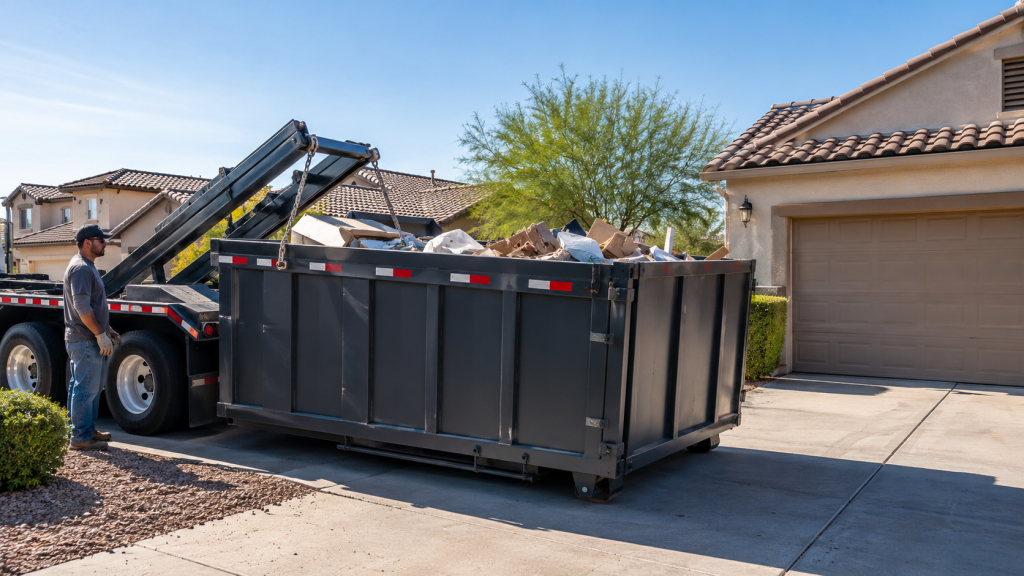
Renting a dumpster for the first time can feel unfamiliar. You may know you need a container for junk, renovation debris, yard waste, or a property cleanout, but you may not know what happens during scheduling, delivery, loading, pickup, or final haul-away.
Your First Dumpster Rental Should Feel Simple
A first-time Dumpster Rental in Phoenix appointment should not feel confusing. In fact, a good local company will walk you through the process, ask the right questions, explain what can go in the dumpster, and help you prepare before the container arrives.
However, it still helps to know what to expect. When you understand the process ahead of time, you can choose the right dumpster option, avoid delays, protect your property, and keep your cleanup organized from start to finish.
This matters whether you are cleaning out a garage, remodeling a bathroom, clearing a rental after a tenant move-out, removing yard debris, downsizing, or managing a commercial cleanup. Additionally, some projects may be easier with Junk Removal instead of a dumpster, especially when heavy furniture, appliances, mattresses, or bulky items need to be lifted and hauled by a crew.
For homeowners, renters, contractors, landlords, property managers, real estate investors, and business owners in Phoenix, Scottsdale, Paradise Valley, and North Scottsdale, the first appointment is the beginning of a smoother cleanup. This guide explains what happens before, during, and after your dumpster rental appointment so you can feel prepared and confident.
Understanding the Search Intent Behind This Topic
People searching for what to expect during a first dumpster rental appointment usually want reassurance. They may have never rented a dumpster before, so they want to avoid mistakes and understand the steps before they book.
In many cases, the cleanup project is already planned or underway. A homeowner may be preparing for a kitchen remodel. A landlord may need to clear a rental property quickly. A contractor may need a container for construction debris. Meanwhile, a business owner may be planning an office cleanout or renovation.
Because of that, first-time customers often ask practical questions:
- How do I schedule a dumpster rental?
- What information do I need before calling?
- How do I choose the right dumpster size?
- Where should the dumpster go?
- Do I need to be home during delivery?
- What items can I load?
- What items are not allowed?
- How long can I keep the dumpster?
- How does pickup work?
- When is junk removal a better choice?
Therefore, this blog focuses on the real experience. It explains the appointment step by step, from the first call to final pickup, while helping you avoid common first-time rental mistakes.
Step 1: You Explain Your Cleanup Project
Your first dumpster rental appointment usually begins with a conversation about your project. The company will want to know what you are cleaning up, how much debris you expect, and where the dumpster will be placed.
This step matters because not all cleanup projects are the same. A garage cleanout may include boxes, broken shelves, furniture, and household clutter. However, a renovation may include drywall, tile, cabinets, flooring, wood, and construction debris.
Be Clear About the Type of Debris
Before calling, take a quick walk through the project area. Then, make a simple list of what needs to go.
For example, you might say:
- “I am cleaning out a two-car garage.”
- “I am remodeling a bathroom and removing tile.”
- “A tenant left furniture and trash behind.”
- “We are removing branches and yard debris.”
- “My business is clearing old office furniture and storage clutter.”
Because debris type affects dumpster size, weight limits, and loading rules, clear information helps the company recommend the best option.
Mention Heavy or Bulky Items
Heavy debris should be discussed early. Tile, concrete, dirt, rock, brick, roofing shingles, wet carpet, and pavers can become heavy quickly.
Likewise, bulky items such as couches, mattresses, appliances, desks, cabinets, and patio furniture can take up a lot of space.
If your project includes heavy or bulky items, say so before scheduling. As a result, the company can explain whether dumpster rental, junk removal, or a combination of both makes the most sense.
Tell the Company About Your Timeline
Timing also matters. Some customers need same-day or next-day service. Others are planning a project for later in the week.
If your cleanup has a deadline, mention it right away. For example, if contractors arrive Monday, movers arrive Friday, or tenants are scheduled to view the property soon, the company needs to know.
Because availability can vary, early scheduling helps you avoid unnecessary stress.
Step 2: You Choose Between Dumpster Rental and Junk Removal
Many first-time customers assume a dumpster is always the answer. However, that is not always true.
Sometimes, junk removal is faster and easier. Other times, a dumpster is the better choice because you need an on-site container for several days.
When Dumpster Rental Is the Better Fit
Dumpster rental is usually ideal when you want to load debris yourself over time.
Choose dumpster rental when:
- You are doing a renovation
- You are clearing multiple rooms
- You have garage or attic clutter
- You have yard debris
- Contractors are creating waste
- You want flexible loading time
- You have help available
- The project will take more than one day
Because the dumpster stays at your property, you can load it as the project moves forward.
When Junk Removal Is the Better Fit
Junk removal is usually better when you need help with lifting, loading, and hauling.
Choose junk removal when:
- Furniture is heavy
- Appliances need removal
- Mattresses are involved
- Items are upstairs
- You do not have helpers
- You want a one-visit cleanup
- The cleanup is mostly bulky items
- You do not want to load a dumpster yourself
For example, if you only need to remove a couch, refrigerator, mattress, and old patio set, junk removal may be simpler than renting a dumpster.
When Both Services Work Best
Some projects need both services. A dumpster can handle renovation debris, boxes, general junk, yard waste, or construction materials. Meanwhile, junk removal can handle heavy furniture, appliances, and bulky items.
Because Junk Gone AZ offers both Dumpster Rental and Junk Removal, first-time customers can choose the service that fits the actual project instead of guessing.
Step 3: You Select the Right Dumpster Option
After discussing the project, the company can help you choose the right dumpster option. This step is important because the wrong size or service type can cause delays, extra costs, or wasted space.
Size Depends on Volume and Weight
Many first-time renters think only about how much space debris takes up. However, weight matters too.
For example, a dumpster full of cardboard may be light. On the other hand, a dumpster filled with tile or concrete may become too heavy before it looks full.
Therefore, the company should ask about both debris volume and material type.
Avoid Choosing Too Small
A dumpster that is too small can fill quickly. Then, you may need another pickup, another container, or extra service.
This can slow the project and increase costs.
Because of that, it is usually better to describe your project honestly. If you are unsure, explain the number of rooms, piles, or large items rather than guessing.
Avoid Choosing Too Large Without a Reason
A larger dumpster may sound safer, but it may not always be the best fit. Large containers need enough placement space and may not be ideal for every driveway or property.
Additionally, heavy materials may have loading limits no matter how large the container is.
A reliable company will help you balance capacity, placement, weight, and project needs.
Step 4: You Review Pricing and Rental Terms
Before confirming your appointment, ask how pricing works. A trustworthy company should explain the rental period, delivery, pickup, possible weight limits, and any extra charges.
Ask What Is Included
First-time renters should ask what the quote includes. For example, does it include delivery and pickup? How long can you keep the dumpster? Is there an included weight amount? What happens if you need extra days?
Clear answers help prevent surprises.
Ask About Possible Extra Fees
Some extra charges may apply in certain situations. For example, additional fees could occur if the dumpster is overloaded, kept too long, filled with prohibited items, or exceeds weight limits.
However, a good provider should explain these possibilities before delivery.
Because of that, pricing should feel transparent rather than vague.
Confirm Pickup Instructions
Ask how pickup works before the dumpster arrives. Some customers schedule pickup at the time of booking, while others call when the dumpster is full.
If you finish early, ask whether early pickup is available. Also, confirm how much notice is needed.
This helps you plan the cleanup timeline more accurately.
Step 5: You Choose the Dumpster Placement Location
Dumpster placement affects convenience, safety, and property protection. Therefore, you should think about location before delivery day.
Driveway Placement Is Often Best
For many residential projects, the driveway is the easiest location. It is close to the home, easy to access, and usually keeps the dumpster off the street.
However, the driveway should be clear, stable, and accessible. If vehicles, trailers, basketball hoops, trash bins, or tools are in the way, move them before delivery.
Consider Surface Protection
If your driveway has pavers, decorative concrete, stone, or another sensitive surface, ask about placement and surface protection.
This is especially important for homes in Paradise Valley and North Scottsdale, where custom driveways and landscaping are common.
Planning ahead helps reduce property concerns.
Avoid Blocking Access
The dumpster should not block garage doors, sidewalks, gates, fire lanes, business entrances, parking spaces, or emergency access unless the placement is approved and planned.
For commercial properties, apartment complexes, condos, or HOA communities, additional placement rules may apply.
Because of that, always confirm property guidelines before scheduling.
Think About Loading Distance
A dumpster placed too far from the cleanup area can make loading harder. However, a dumpster placed in a poor location can block daily activity.
Try to choose a spot that is close enough for efficient loading while still allowing safe access around the property.
Step 6: You Prepare the Property Before Delivery
Preparation makes delivery faster and easier. Before the dumpster arrives, take a few simple steps.
Clear the Drop-Off Area
Move vehicles, tools, outdoor furniture, toys, trash bins, planters, and anything else that may block delivery.
Additionally, check for low branches, overhead wires, narrow gates, or tight turns. The delivery truck needs enough space to approach, place the dumpster, and leave safely.
Mark the Preferred Placement Spot
If you have a specific placement location in mind, make it obvious. You can tell the company during scheduling, or you can mark the area if needed.
However, the final placement may depend on safety, truck access, and surface conditions.
Notify Others at the Property
If contractors, family members, tenants, employees, or neighbors may be affected, let them know when the dumpster is arriving.
For example, ask people not to park in the delivery area. Also, make sure workers know where debris should go once the dumpster is placed.
Confirm HOA or Building Rules
If you live in a condo, apartment, gated community, or HOA neighborhood, confirm rules before delivery. Some communities may have restrictions on placement, timing, or how long a dumpster can remain.
Because rules can vary, it is better to ask early than deal with a last-minute problem.
Step 7: The Dumpster Is Delivered
On delivery day, the driver brings the dumpster to your property and places it in the agreed area when access allows.
Do You Need to Be Present?
In many cases, you may not need to be present if placement details are clear and the area is accessible. However, first-time renters may prefer to be there to confirm the location.
If you cannot be present, make sure instructions are clear. Include gate codes, access notes, placement preferences, and any obstacles the driver should know about.
What Happens During Delivery?
The driver positions the truck, unloads the dumpster, and places it as safely as possible. After that, you can begin loading approved debris.
Because delivery requires room, do not crowd the area with vehicles or materials.
Check the Placement Before Loading
Before placing heavy items inside, make sure the dumpster location works. If it blocks something important, address the issue before loading.
Once the container is full, moving it may be difficult or require additional service.
Step 8: You Load the Dumpster Safely
After delivery, loading begins. This is where many first-time renters make mistakes, so it helps to follow a few basic rules.
Load Heavy Items First
Place heavy materials near the bottom of the dumpster. Then, load lighter debris on top.
This helps keep the load stable and makes better use of space.
Spread Weight Evenly
Do not place all heavy debris in one corner. Instead, spread weight across the dumpster floor.
Even weight distribution helps support safer hauling.
Break Down Bulky Items
If possible, break down boxes, lightweight shelves, and small furniture. Remove table legs, flatten cardboard, and disassemble simple items when safe.
However, avoid breaking items with glass, sharp metal, or heavy parts unless you can do it safely.
Keep Debris Below the Top Edge
Do not overfill the dumpster. Materials should stay below the top edge so the container can be hauled safely.
If debris sticks out above the sides, pickup may be delayed until the load is corrected.
Use Proper Safety Gear
Wear gloves, closed-toe shoes, and eye protection when loading debris. If the project is dusty, use dust protection as needed.
Additionally, take breaks during hot Phoenix weather and drink water often.
Step 9: You Keep Prohibited Items Out
Not everything can go in a dumpster. First-time renters should separate questionable items before loading begins.
Common Items That May Need Special Handling
Items that may require special handling include:
- Paint
- Chemicals
- Fuel
- Propane tanks
- Batteries
- Tires
- Pool chemicals
- Pesticides
- Electronics
- Liquids
- Medical waste
- Hazardous materials
- Some appliances
Because these items can create safety or disposal issues, keep them out of the dumpster until your provider confirms proper handling.
Create a “Check First” Area
Before cleanup starts, set aside a space for questionable items. This works well during garage cleanouts, estate cleanouts, office cleanouts, and tenant move-outs.
Place old paint, batteries, electronics, chemicals, and unknown containers there. Then, ask what should happen next.
This simple habit can prevent pickup delays.
Tell Helpers the Rules
If family members, contractors, employees, or tenants are helping, make sure they know what cannot go into the dumpster.
A short reminder can prevent someone from tossing restricted items into the container by mistake.
Step 10: You Schedule Pickup
Once the dumpster is full or your project is complete, it is time for pickup. The process is usually simple, but preparation still matters.
Keep Pickup Access Clear
The truck needs room to reach the dumpster. Therefore, do not park vehicles, stack debris, or leave tools in front of the container.
If access is blocked, pickup may be delayed.
Check the Load Before Pickup
Before calling for pickup or before the scheduled pickup window, inspect the dumpster. Make sure debris is below the top edge, nothing hangs over the sides, and restricted items are not inside.
This final check helps prevent problems.
Clean Around the Dumpster Area
Sweep small debris, nails, wood scraps, tile pieces, or trash from around the container. This protects tires, shoes, pets, and people walking nearby.
Additionally, a clean area makes the property look better once the dumpster is removed.
What First-Time Renters Often Get Wrong
Most first-time dumpster rental mistakes are avoidable. Knowing them early can save time and stress.
Waiting Too Long to Schedule
If you wait until debris is already blocking the project, scheduling may feel rushed. Instead, book the dumpster before demolition, cleaning, or sorting begins.
This gives your project a cleaner start.
Underestimating the Amount of Junk
Many people think they have less debris than they actually do. Once closets, garages, patios, cabinets, and storage areas are emptied, the pile grows quickly.
Therefore, describe the full project, not just the first pile you see.
Ignoring Weight Limits
Heavy debris can create problems even when the dumpster has space left. Tile, dirt, concrete, roofing materials, and wet debris can exceed limits quickly.
Because of that, always mention heavy materials before booking.
Loading Prohibited Items
Paint, chemicals, batteries, fuel, electronics, and liquids can cause pickup delays. First-time renters often overlook these items during garage or storage cleanouts.
A separate “check first” area solves this problem.
Blocking Pickup Access
A full dumpster cannot be picked up if vehicles or materials block access. Before pickup, make sure the area is open.
This small step can prevent an unnecessary delay.
What Can Usually Go in a Dumpster?
Accepted items vary by provider, so always ask before loading. Still, many dumpsters can handle common non-hazardous debris.
Common Accepted Items
Depending on your project, a dumpster may accept:
- Household junk
- Boxes
- Broken furniture
- Wood
- Drywall
- Flooring
- Cabinets
- Yard debris
- Remodeling debris
- Construction waste
- Small outdoor items
- General clutter
- Non-hazardous commercial debris
If you have mixed materials, explain them before scheduling.
Items That Need Extra Planning
Some materials may be allowed but require special discussion because they are heavy or bulky.
These may include:
- Tile
- Concrete
- Brick
- Dirt
- Rock
- Gravel
- Pavers
- Roofing shingles
- Wet carpet
- Large furniture
Because these items can affect weight and space, ask before loading.
First Dumpster Rental for Homeowners
Homeowners often rent dumpsters for projects that feel too large for regular trash bins.
Garage Cleanouts
Garage cleanouts are one of the most common first-time rental projects. Boxes, broken shelves, tools, holiday décor, old furniture, and storage clutter can fill a dumpster fast.
However, garages often contain restricted items such as paint, fuel, chemicals, batteries, and electronics. Therefore, sort those items before loading.
Home Renovations
Renovations create debris quickly. Cabinets, drywall, flooring, tile, trim, fixtures, and packaging may pile up throughout the project.
A dumpster keeps the work area cleaner and gives contractors a central disposal point.
Yard Projects
Yard debris such as branches, palm fronds, shrubs, and outdoor clutter may be suitable for dumpster rental. However, dirt, rock, gravel, concrete, and pavers require special planning because they are heavy.
Before loading landscape materials, ask about weight limits.
First Dumpster Rental for Contractors
Contractors often need dependable dumpster rental to keep job sites organized.
Delivery Timing Matters
A dumpster should arrive before demolition or heavy debris removal begins. Otherwise, materials may pile up and slow the crew.
Therefore, contractors should schedule delivery around the project timeline.
Job Site Safety Improves
Debris left on the ground can create trip hazards. A dumpster gives crews a clear place to put waste as work continues.
As a result, the site stays safer and more professional.
Communication Prevents Loading Problems
Contractors should explain dumpster rules to crews. Heavy materials, prohibited items, and fill lines should be clear before loading begins.
This helps avoid pickup delays.
First Dumpster Rental for Landlords and Property Managers
Rental property cleanouts can be urgent, especially after tenant move-outs.
Move-Out Debris Can Be Unpredictable
Tenants may leave trash, furniture, mattresses, appliances, garage clutter, patio items, and damaged materials behind.
A dumpster can handle general debris. However, junk removal may be better for couches, mattresses, appliances, and heavy furniture.
Fast Cleanup Supports Faster Turnovers
Once debris is removed, cleaners, painters, flooring installers, and repair crews can work more efficiently.
Because of that, dumpster rental can help reduce vacancy delays.
Document Before Removing Items
Before removing tenant-left items, landlords and property managers should follow lease terms, company policy, and applicable requirements.
After documentation and confirmation, waste removal can help move the unit toward rent-ready condition.
First Dumpster Rental for Businesses
Businesses may need dumpster rental for office cleanouts, remodels, relocations, warehouse projects, or commercial repairs.
Plan Around Operations
A dumpster should not block customers, employees, loading zones, fire lanes, or deliveries.
Therefore, placement should be coordinated with managers, property owners, or building staff.
Separate Electronics and Sensitive Items
Office cleanouts often include computers, printers, monitors, phones, and documents. These items may need special handling.
Additionally, sensitive documents should be shredded or handled securely before disposal.
Use Junk Removal for Heavy Office Items
Desks, conference tables, filing cabinets, and office furniture can be difficult to load. Junk removal can help clear these items quickly without pulling employees away from business tasks.
Local Considerations in Phoenix, Scottsdale, Paradise Valley, and North Scottsdale
Dumpster rental experience can vary depending on property type and location.
Phoenix
Phoenix customers often rent dumpsters for garage cleanouts, renovations, tenant turnovers, yard debris, and construction projects.
Because projects may happen quickly, clear scheduling and local service are helpful.
Scottsdale
Scottsdale customers often care about property appearance and efficient service. Dumpster placement should be clean, practical, and respectful of neighbors or businesses.
Junk removal can also help when bulky items need to be removed quickly.
Paradise Valley
Paradise Valley homes often have custom driveways, gates, landscaping, and high-end finishes. Therefore, placement and surface protection should be discussed before delivery.
Discreet service may also matter during estate cleanouts or renovations.
North Scottsdale
North Scottsdale properties often include larger garages, outdoor living areas, remodeling projects, and desert landscaping.
Because cleanups may involve mixed debris, flexible service options are useful.
How to Make Your First Appointment Easier
A little preparation can make your first dumpster rental simple.
Have Photos Ready If Needed
If you are unsure about dumpster size, photos of the debris may help the company understand the project. While not always necessary, photos can make recommendations easier.
Ask Questions Early
Do not wait until delivery day to ask about prohibited items, placement, weight limits, or pickup.
Clear answers before delivery make the appointment smoother.
Prepare Helpers
If family members, employees, contractors, or maintenance staff will load the dumpster, explain the plan. Let them know what goes in, what stays out, and how high the dumpster can be filled.
This prevents confusion.
Keep the Project Moving
Once the dumpster arrives, begin loading in an organized way. Start with large or heavy approved items, then fill gaps with smaller debris.
A planned loading approach saves space.
Red Flags to Avoid During Your First Rental
Choosing the wrong company can make a first dumpster rental frustrating.
Vague Pricing
A reliable company should explain what is included and what could cost extra. If pricing is unclear, ask for details before booking.
No Questions About Your Project
The company should ask what you are removing. If no one asks about debris type, weight, placement, or timeline, the recommendation may not fit.
Poor Communication
If the company is hard to reach before delivery, it may be difficult to reach later.
Because first-time renters often have questions, communication matters.
No Prohibited Item Guidance
A dependable provider should explain what cannot go in the dumpster. This prevents accidental loading mistakes.
No Junk Removal Option
Some projects require labor. If the company only offers dumpsters, you may need another provider for heavy or bulky items.
A company with both services gives first-time customers more flexibility.
Why Junk Gone AZ Is a Smart Choice for First-Time Renters
Junk Gone AZ provides dumpster rental and junk removal services for residential and commercial customers throughout Phoenix, Scottsdale, Paradise Valley, and North Scottsdale.
Because first-time renters often need guidance, practical support matters.
Dumpster Rental for Flexible Cleanup
Dumpster rental works well for renovations, garage cleanouts, moving projects, yard debris, tenant turnovers, estate cleanouts, construction waste, and commercial cleanups.
With a dumpster on-site, customers can load debris at their own pace while keeping the project organized.
Junk Removal for Hands-Off Service
When heavy lifting is the challenge, Junk Gone AZ also offers full-service junk removal. The crew can remove furniture, appliances, mattresses, office items, patio furniture, and bulky debris.
This helps customers save time and avoid difficult lifting.
Local Guidance From Start to Finish
Junk Gone AZ understands Phoenix-area cleanup needs. Whether you are renting a dumpster for the first time at a Phoenix home, clearing a Scottsdale rental, planning a Paradise Valley renovation, or managing a North Scottsdale cleanout, the team can help you choose the right service.
A clear first-rental guide can make the entire process feel easier, faster, and more predictable.
Conclusion: Your First Dumpster Rental Can Be Simple
Your first dumpster rental appointment does not have to be confusing. When you know what to expect, the process becomes much easier.
First, describe your project clearly. Then, choose between dumpster rental, junk removal, or a combination of both. After that, confirm pricing, placement, accepted items, weight limits, delivery instructions, and pickup details.
Once the dumpster arrives, load safely, keep restricted items out, avoid overfilling, and maintain clear pickup access. As a result, your cleanup can stay organized from start to finish.
For homeowners, contractors, landlords, property managers, and businesses, Dumpster Rental in Phoenix is a practical solution for larger cleanups, renovations, yard projects, tenant turnovers, and commercial debris. However, Junk Removal may be the better choice when heavy or bulky items need to be removed by a crew.
Ultimately, the right company should make your first appointment feel clear, professional, and stress-free. With Junk Gone AZ, customers throughout Phoenix, Scottsdale, Paradise Valley, and North Scottsdale can get dependable cleanup support that fits the project.
FAQs About Your First Phoenix Dumpster Rental Appointment
Do I need to be home when the dumpster is delivered?
You may not need to be home if placement instructions are clear and access is open. However, first-time renters may prefer to be present to confirm the dumpster location.
How do I know what dumpster size I need?
Describe your project, debris type, and approximate amount to the rental company. They can help recommend the right option based on volume, weight, and project type.
What should I do before the dumpster arrives?
Clear the delivery area, move vehicles and obstacles, confirm placement rules, protect sensitive surfaces if needed, and separate restricted items before loading begins.
What can I put in a rental dumpster?
Many dumpsters can accept household junk, boxes, broken furniture, wood, drywall, flooring, cabinets, yard debris, remodeling materials, and general non-hazardous debris. Always ask before loading.
What should not go in a dumpster?
Paint, chemicals, fuel, propane tanks, batteries, tires, pool chemicals, pesticides, electronics, liquids, medical waste, hazardous materials, and some appliances may require special handling.
Can I fill the dumpster above the top edge?
No. Debris should stay below the top edge of the dumpster so the container can be hauled safely. Overfilled dumpsters may cause pickup delays.
Is junk removal better for my first cleanup?
Junk removal may be better if you have heavy furniture, appliances, mattresses, office items, or bulky debris that you do not want to lift or load yourself.
How does dumpster pickup work?
Pickup is either scheduled in advance or requested when you finish loading, depending on the provider. Before pickup, make sure the dumpster is accessible and not overfilled.
Can a dumpster be placed in my driveway?
A dumpster can often be placed in a driveway if there is safe access and enough space. If your driveway has pavers, decorative concrete, or a sensitive surface, ask about placement and protection.
Does Junk Gone AZ serve Scottsdale, Paradise Valley, and North Scottsdale?
Yes. Junk Gone AZ provides dumpster rental and junk removal services in Phoenix, Scottsdale, Paradise Valley, and North Scottsdale.
Schedule Dumpster Rental for Your Phoenix Home Renovation
A reliable dumpster rental can make your first cleanup appointment easier by giving you a clear plan, organized debris removal, and flexible support from start to finish.
Contact Junk Gone AZ for fast, reliable service in Phoenix, Scottsdale, Paradise Valley, and North Scottsdale.