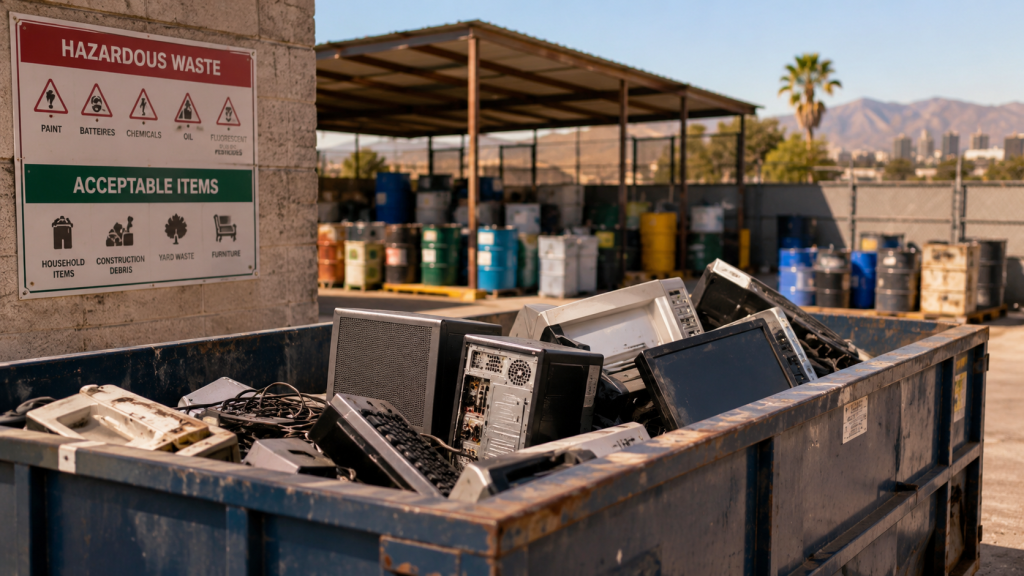
Renting a dumpster is one of the easiest ways to handle a major cleanout, renovation, move, tenant turnover, estate cleanup, or construction project. However, not everything belongs in a rental dumpster. Electronics, batteries, paint, chemicals, fuel, pesticides, pool products, and other hazardous materials often need special handling.
Why You Should Sort Before You Load
Before scheduling Dumpster Rental in Phoenix, it is important to understand what can go into the dumpster and what should stay out. Otherwise, a simple cleanup can turn into a frustrating problem with pickup delays, extra fees, safety risks, or disposal issues.
Many Phoenix homeowners and businesses discover restricted items during garage cleanouts, office cleanouts, estate cleanouts, remodeling projects, and rental property turnovers. Because these items are often hidden in cabinets, storage rooms, sheds, and garages, they can accidentally end up in the wrong pile.
Fortunately, a little planning can prevent most problems. When you separate e-waste and hazardous materials before loading, the rest of the cleanup becomes safer, smoother, and easier to manage.
This guide explains how to handle e-waste and hazardous materials during dumpster rental projects in Phoenix. It also explains when Junk Removal may be a better choice, how to sort questionable items, and how Junk Gone AZ helps residential and commercial customers throughout Phoenix, Scottsdale, Paradise Valley, and North Scottsdale.
Understanding the Search Intent Behind This Topic
People searching for e-waste and hazardous materials guidance are usually trying to avoid making a costly mistake. They may already have a dumpster scheduled, or they may be planning a cleanout and wondering what items are allowed.
In many cases, the main concern is simple: “Can I throw this away in a dumpster?”
However, the answer depends on the item. A broken chair is very different from a laptop. Old drywall is different from paint thinner. Yard debris is different from pool chemicals. Because of that, customers need clear guidance before the dumpster arrives.
Most readers want to know:
- Can electronics go in a dumpster?
- What should I do with paint?
- Are batteries allowed?
- Can appliances be loaded?
- What counts as hazardous waste?
- Do businesses follow different rules?
- What happens if restricted items get mixed in?
- Is dumpster rental or junk removal better?
Because these questions affect safety and compliance, the best approach is to keep the guidance practical. Dumpster rental works well for non-hazardous debris. Meanwhile, e-waste and hazardous materials usually need a separate plan.
Why E-Waste and Hazardous Materials Matter
A dumpster is designed to handle common debris from cleanouts, moves, renovations, and construction jobs. However, electronic waste and hazardous materials can create problems because they may contain chemicals, batteries, metals, liquids, pressurized contents, or flammable components.
As a result, they should not be treated like normal household junk.
Safety Comes First
Hazardous materials can leak, ignite, react, or contaminate other debris. For example, a battery can become dangerous if crushed. A paint can may leak during hauling. Pool chemicals can react if mixed with other products. Additionally, pressurized containers can create risks if they are damaged.
Therefore, separating these items protects homeowners, workers, drivers, disposal facilities, and the surrounding community.
Disposal Rules Can Vary
Different materials may follow different disposal rules. Also, residential and commercial waste may not be handled the same way.
For instance, a homeowner cleaning out a garage may have access to residential household hazardous waste options. However, a business disposing of chemicals, batteries, or electronics from operations may have different responsibilities.
Because requirements can change, customers should always confirm current rules before disposing of questionable items.
Sorting Prevents Delays
If restricted materials end up in a dumpster, pickup may be delayed until those items are removed. Additionally, extra fees may apply if prohibited materials create disposal problems.
Because of that, sorting before loading is much easier than correcting mistakes later.
What Counts as E-Waste?
E-waste, or electronic waste, includes unwanted electronic devices and equipment. These items may contain circuit boards, screens, batteries, wiring, metals, or other components that require careful disposal or recycling.
Common Examples of E-Waste
During a Phoenix cleanout, e-waste may include:
- Televisions
- Computer monitors
- Desktop computers
- Laptops
- Tablets
- Cell phones
- Printers
- Scanners
- Routers
- Modems
- Gaming systems
- Speakers
- DVD players
- Cables and chargers
- Office electronics
- Small electronic devices
At first, these items may look like regular junk. However, they can require different handling than furniture, boxes, or wood.
For example, an old couch may be acceptable in some dumpsters, but a box of laptops may need special recycling or disposal. Likewise, a printer may contain electronic components, toner, or other materials that should not be tossed into a general debris pile without checking first.
Why Electronics Should Be Separated
Electronics can contain batteries, metals, glass, plastics, and components that should not be crushed or mixed with normal debris. Additionally, some devices may contain personal or business data.
Therefore, e-waste should be separated before the dumpster is loaded.
If the electronics are large or heavy, junk removal may be a better option. A crew can lift and haul bulky items, which saves time and reduces the risk of injury.
What Counts as Hazardous Materials?
Hazardous materials are items that may create health, safety, fire, chemical, environmental, or disposal concerns. These items should usually stay out of a standard dumpster unless your provider confirms they are allowed.
Common Household Hazardous Materials
Many hazardous materials are found in everyday homes. During a cleanup, you may discover:
- Paint
- Paint thinner
- Solvents
- Gasoline
- Motor oil
- Automotive fluids
- Pesticides
- Herbicides
- Pool chemicals
- Cleaning chemicals
- Propane tanks
- Aerosol cans
- Batteries
- Fluorescent bulbs
- Mercury-containing items
- Medical sharps
- Liquids
- Unknown chemicals
- Pressurized containers
Because these items are often stored in garages, sheds, laundry rooms, cabinets, and outdoor storage areas, they are easy to overlook until the cleanup begins.
Why Hazardous Materials Do Not Belong in Regular Dumpsters
Hazardous materials can create problems during loading, hauling, and disposal. A leaking container can contaminate other debris. A chemical reaction can create fumes or heat. A damaged battery can become a fire risk.
For that reason, these items require extra caution.
A standard dumpster is usually meant for non-hazardous debris. Therefore, when in doubt, keep questionable items separate and ask before loading.
Household Waste vs. Business Waste
One of the most important details is whether the waste comes from a household or a business. This distinction matters because residential cleanup waste and commercial waste may follow different rules.
Residential Cleanup Projects
Homeowners often discover hazardous materials during normal cleanouts. Old paint cans, batteries, pool chemicals, electronics, pesticides, and cleaning products may sit unused for years.
If you are a Phoenix resident, you should check current local household hazardous waste options before disposal. Since programs and procedures can change, it is always wise to confirm what is accepted and how pickup or drop-off works before starting the cleanup.
Meanwhile, your rental dumpster can still handle many non-hazardous items from the same project, such as broken furniture, boxes, wood, flooring, drywall, cabinets, and general clutter.
Commercial Cleanup Projects
Businesses need to be more careful. Commercial hazardous waste responsibilities can depend on the type of waste, how much is generated, and how it is stored or disposed of.
For example, a small office with old computers may need e-waste handling. However, an auto shop with solvents, oil, batteries, and fluids may need a more formal waste management plan.
Because of that, businesses should not assume household disposal options apply to them. Instead, they should confirm requirements before putting any hazardous materials in or near a dumpster.
Common Projects Where Restricted Items Appear
E-waste and hazardous materials often appear during larger cleanups. Therefore, knowing where they usually hide can help you plan ahead.
Garage Cleanouts
Garages are one of the most common places to find restricted items. Homeowners often store paint, automotive fluids, batteries, pesticides, propane tanks, electronics, and cleaners in the garage.
Before loading your dumpster, walk through the garage carefully. Then, create a separate area for anything questionable.
A dumpster can still help with general garage junk. For example, old shelves, boxes, broken furniture, wood scraps, and non-hazardous clutter may be suitable for dumpster loading. However, paint, chemicals, batteries, and fuel should stay out until proper disposal is confirmed.
Estate Cleanouts
Estate cleanouts often involve years of accumulated belongings. As a result, families may discover old electronics, garage chemicals, medications, tools, batteries, paperwork, appliances, and personal items.
Because estate cleanouts can be emotional, it is easy to focus on furniture and keepsakes while missing restricted materials. However, sorting these items early can prevent problems later.
Additionally, old computers, phones, and tablets should be checked for personal data before disposal.
Tenant Move-Outs
Landlords and property managers often deal with mixed debris after tenant move-outs. Tenants may leave furniture, trash, mattresses, electronics, cleaning supplies, paint cans, batteries, and outdoor chemicals.
In this situation, rapid dumpster rental can help remove general debris quickly. However, e-waste and hazardous materials should be pulled aside before loading.
If bulky items remain inside the unit, junk removal may also help speed up the turnover.
Home Renovations
Renovation projects often create wood, drywall, flooring, cabinets, tile, fixtures, and packaging. In many cases, these non-hazardous materials are suitable for dumpster rental.
However, remodeling can also reveal old paint, adhesives, sealants, solvents, fluorescent bulbs, treated materials, or unknown containers.
Therefore, contractors and homeowners should sort materials before loading. If a material looks chemical, liquid, pressurized, or unfamiliar, it should not go into the dumpster without confirmation.
Office Cleanouts
Office cleanouts often produce e-waste. Old monitors, computers, printers, servers, cables, phones, routers, and office machines may pile up during moves or upgrades.
Although a dumpster can help with general office junk, electronics should usually be separated. Also, businesses should protect data before disposing of computers or storage devices.
What Can Usually Go in a Dumpster?
A standard dumpster is best for non-hazardous debris. Although rules can vary by provider, many dumpster rentals can accept common cleanup materials.
Common Non-Hazardous Items
Depending on your project, accepted items may include:
- Household junk
- Broken furniture
- Boxes
- Wood
- Drywall
- Flooring
- Cabinets
- Yard debris
- Roofing debris
- Construction waste
- Remodeling materials
- General clutter
- Small outdoor items
- Non-hazardous commercial debris
Even so, you should describe your project before booking. That way, the company can help you choose the right service and explain any restrictions.
Why Material Details Matter
A dumpster filled with boxes and furniture is different from a dumpster filled with tile, roofing materials, dirt, or concrete. Heavy debris can affect weight limits.
Additionally, mixed debris can create sorting issues if electronics or chemicals are accidentally included.
Because of that, clear communication helps the entire project run better.
What Should Not Go in a Standard Dumpster?
Some items should generally stay out of a rental dumpster unless your provider clearly says they are accepted.
Electronics
Televisions, computers, monitors, printers, phones, and devices with batteries may require special handling. Because of that, separate electronics before loading.
Batteries
Batteries can create fire or chemical risks, especially if they are lithium, rechargeable, lead-acid, or damaged. Therefore, keep batteries out of the dumpster until proper disposal is confirmed.
Paint and Solvents
Paint, stains, paint thinner, solvents, and related products should usually stay out of standard dumpsters. Even old containers may contain liquid or residue.
Chemicals and Cleaners
Pool chemicals, pesticides, herbicides, cleaning products, and automotive fluids should be handled carefully. Since chemicals can leak or react, they should not be mixed into general debris.
Propane Tanks and Pressurized Containers
Propane tanks, aerosol cans, and pressurized containers can create serious safety concerns. Even if a container seems empty, it may still be unsafe for standard disposal.
Medical Waste and Sharps
Medical sharps, needles, and medical waste should never be mixed into general cleanup debris. These items create injury and health risks.
Liquids
Most dumpsters are not designed for liquids. Liquids can leak, spill, contaminate debris, and create hauling problems.
E-Waste Sorting Tips Before Dumpster Rental
E-waste sorting is easier when you create a clear system before cleanup begins.
Create an Electronics Zone
Choose one place for electronics before loading starts. This may be a garage corner, office table, spare room, or labeled bin.
Then, place computers, monitors, printers, cables, phones, tablets, and other electronics there. This keeps them from being accidentally loaded into the dumpster.
Remove Personal Data
Before disposing of computers, phones, tablets, hard drives, or business devices, remove sensitive data. This is especially important for offices, landlords, estate cleanouts, and home businesses.
If you are unsure how to wipe a device, ask a qualified professional.
Separate Devices With Batteries
Devices with rechargeable or lithium batteries should be handled carefully. Do not crush, puncture, or toss them into mixed debris.
Instead, keep them separate until you confirm proper disposal.
Use Junk Removal for Heavy Electronics
Large televisions, office machines, and heavy electronics can be difficult to move. If stairs, tight hallways, or heavy lifting are involved, junk removal may be safer than loading the items yourself.
Hazardous Material Sorting Tips Before Dumpster Rental
Hazardous material sorting should happen before anyone starts loading the dumpster.
Start With Storage Areas
Begin with garages, sheds, laundry rooms, utility closets, pool areas, and workshops. These spaces often contain paint, chemicals, batteries, fuel, cleaners, pesticides, and automotive products.
After that, check under sinks, cabinets, patios, and storage bins.
Keep Items in Original Containers
If possible, keep hazardous materials in their original containers. Labels help identify what the item is and how it should be handled.
If a container is leaking or unlabeled, do not guess. Instead, set it aside carefully and ask for proper disposal guidance.
Do Not Mix Chemicals
Never combine chemicals to save space. Mixing products can create dangerous reactions.
Instead, keep containers separate, upright, and away from heat or open flame.
Make a “Do Not Load” Area
Create a clearly marked area for restricted items. This prevents helpers, family members, tenants, or contractors from accidentally loading them into the dumpster.
This step is especially helpful during large cleanouts because multiple people may be working at once.
Dumpster Rental vs. Junk Removal for E-Waste and Hazardous Materials
The right service depends on what you need removed and how much labor is involved.
When Dumpster Rental Works Best
Dumpster rental works best when most of the debris is non-hazardous and you want to load at your own pace.
Choose dumpster rental when:
- You are remodeling
- You are clearing household junk
- You have yard debris
- You are removing construction waste
- You are cleaning out a rental property
- You can separate restricted items
- You need a container on-site
- You have several days of cleanup work
In this case, the dumpster handles regular debris while e-waste and hazardous materials stay separate.
When Junk Removal Works Better
Junk removal may be better when items are heavy, bulky, or difficult to move.
Choose junk removal when:
- Large electronics need removal
- Heavy appliances are involved
- Furniture is mixed with e-waste
- Items are upstairs
- You need fast service
- Your team lacks labor
- You want a hands-off cleanup
However, junk removal does not mean every hazardous item can automatically be taken. You should still explain what you have before scheduling.
When You May Need Both
Many cleanups benefit from both services. A dumpster can handle non-hazardous debris, while junk removal can handle heavy electronics, appliances, furniture, and bulky items.
Because Junk Gone AZ offers both Dumpster Rental and Junk Removal, customers can choose the right service for each part of the cleanup.
Residential Cleanup: A Simple Plan for Phoenix Homeowners
Homeowners can avoid most problems by following a simple process before the dumpster arrives.
Step 1: Walk Through the Property
Start by checking the home, garage, shed, patio, laundry room, utility area, and yard. Look for electronics, batteries, chemicals, paint, propane tanks, liquids, and unknown containers.
This walk-through gives you a clear picture of what needs special attention.
Step 2: Identify Regular Dumpster Items
Next, identify the items likely suitable for dumpster loading. These may include furniture, boxes, wood, drywall, cabinets, flooring, yard debris, and general clutter.
Once these materials are separated, cleanup becomes easier.
Step 3: Pull Restricted Items Aside
After that, set aside e-waste and hazardous materials. Keep them away from the main debris pile so they do not get loaded by mistake.
A labeled area works well.
Step 4: Ask Before Loading Questionable Items
If something is electronic, chemical, liquid, pressurized, flammable, sharp, or unknown, ask before loading it.
This one habit can save time and prevent pickup issues.
Commercial Cleanup: What Phoenix Businesses Should Consider
Businesses need extra caution because commercial waste rules may differ from household disposal expectations.
Know What Your Business Generates
Before scheduling dumpster rental, list the types of waste your business has. Office junk, packaging, furniture, and general clutter may be straightforward. However, electronics, batteries, lamps, chemicals, aerosols, solvents, and oils require more thought.
The type and amount of waste can affect how it should be handled.
Protect Data During Office Cleanouts
If your office is removing computers, phones, servers, or storage devices, protect data first. Business records, customer information, passwords, and internal files should not leave the property unsecured.
Therefore, plan data removal before e-waste disposal.
Separate Maintenance Products
Many businesses store cleaners, aerosols, batteries, lamps, chemicals, and maintenance supplies. During a cleanout, these items should be sorted separately.
If your business has regulated materials, confirm requirements before disposal.
Use Dumpster Rental for Non-Hazardous Debris
A dumpster can still be extremely helpful for office furniture, packaging, shelving, renovation debris, and general non-hazardous clutter.
However, e-waste and hazardous materials need their own plan.
A clear protocol helps businesses prevent mistakes and keep cleanouts organized.
Special Considerations for Contractors and Property Managers
Contractors and property managers often deal with mixed debris. Because schedules are tight, it is easy for restricted items to get overlooked.
Contractors
Contractors may remove drywall, flooring, wood, cabinets, tile, roofing materials, and packaging. However, they may also encounter old paint, adhesives, sealants, solvents, lamps, or unknown materials.
Before work begins, explain loading rules to the crew. Also, make sure restricted items are separated from regular debris.
This small step can prevent delays when the dumpster is ready for pickup.
Property Managers
Property managers often face tenant-left items. A move-out may include furniture, trash, electronics, batteries, paint, pool chemicals, cleaning products, and appliances.
Because these materials can be mixed together, sorting should happen before anything is loaded.
Junk removal may also help when bulky items remain inside the unit, garage, or patio.
Real Estate Investors
Real estate investors may encounter unknown materials during property cleanouts. Older homes, sheds, garages, and storage units can contain years of products.
Therefore, investors should avoid rushing unknown containers into the dumpster. Instead, separate questionable materials and confirm proper handling.
Local Considerations in Phoenix, Scottsdale, Paradise Valley, and North Scottsdale
Cleanup needs can vary by location and property type. Because of that, local experience matters.
Phoenix
Phoenix homeowners and businesses often need fast waste removal during renovations, garage cleanouts, tenant turnovers, and estate cleanouts. However, e-waste and hazardous materials can appear in many of these projects.
Therefore, sorting before loading is important.
Scottsdale
Scottsdale properties may include condos, offices, retail spaces, and homes with limited placement options. Because of that, junk removal may sometimes be easier than dumpster rental for bulky electronics, office equipment, or appliances.
However, dumpster rental still works well for larger non-hazardous cleanouts.
Paradise Valley
Paradise Valley cleanouts often involve high-end homes, estate projects, and carefully maintained properties. Therefore, discreet service, careful placement, and proper sorting can make the cleanup smoother.
If the property has pavers, gates, or custom driveways, placement planning is also important.
North Scottsdale
North Scottsdale homes often include larger garages, outdoor spaces, storage areas, and remodeling projects. As a result, mixed debris is common.
A flexible provider can help customers decide which items belong in a dumpster and which items need another plan.
How Improper Disposal Can Affect Your Project
Improper disposal can create several avoidable problems.
Pickup Delays
If restricted items are found in the dumpster, pickup may be delayed. The company may require those items to be removed before hauling.
Because of that, sorting before loading is always easier than fixing the issue later.
Extra Costs
Some materials can create added disposal costs. If prohibited items are loaded, extra charges may apply.
Clear communication before the rental helps prevent surprises.
Safety Concerns
Hazardous materials can endanger people handling the dumpster. Batteries, chemicals, liquids, and pressurized containers can create risks during transport.
Therefore, proper sorting protects everyone involved.
Project Slowdowns
If your cleanup supports a renovation, sale, move, tenant turnover, or commercial project, delays can affect the entire schedule.
By keeping e-waste and hazardous materials separate, you help the project stay on track.
Red Flags to Avoid When Renting a Dumpster for Mixed Debris
Choosing the wrong provider can make a mixed-debris cleanup harder.
No Discussion of Prohibited Items
A reliable company should explain what cannot go in the dumpster. If no one mentions restricted items, ask directly.
Vague Pricing
Ask what is included, whether weight limits apply, how long the rental lasts, and what could cost extra. Clear pricing helps prevent confusion.
No Questions About Your Project
A good provider should ask what you are removing. If the company does not ask whether you have electronics, chemicals, construction debris, or heavy materials, the recommendation may not fit your cleanup.
Poor Communication
If a company is hard to reach before booking, it may be hard to reach later. Because mixed debris projects require guidance, communication matters.
No Flexible Service Options
Some projects need dumpster rental. Others need junk removal. Many need both.
A provider with both services can help you avoid forcing the wrong solution.
A Practical Checklist Before Dumpster Delivery
Before the dumpster arrives, use a simple checklist to keep the cleanup organized.
Keep These Items Separate
Set aside:
- Electronics
- Batteries
- Paint
- Chemicals
- Fuel
- Propane tanks
- Pool chemicals
- Pesticides
- Tires
- Liquids
- Medical waste
- Unknown containers
- Pressurized containers
Then, ask how each item should be handled.
Ask Before Loading These Items
Check first before loading:
- Appliances
- Large electronics
- Fluorescent bulbs
- Aerosol cans
- Wet materials
- Heavy debris
- Treated wood
- Unlabeled containers
This helps prevent pickup problems and confusion.
Usually Better for Dumpster Loading
Many dumpsters can help with:
- Furniture
- Boxes
- Wood
- Drywall
- Flooring
- Cabinets
- Yard debris
- General household junk
- Construction debris
- Non-hazardous clutter
Still, provider rules may vary, so it is always smart to confirm.
Why Junk Gone AZ Is a Smart Local Choice
Junk Gone AZ helps residential and commercial customers throughout Phoenix, Scottsdale, Paradise Valley, and North Scottsdale with dumpster rental and junk removal.
Because e-waste and hazardous materials can complicate cleanups, customers benefit from clear communication and flexible service options.
Dumpster Rental for Non-Hazardous Debris
Dumpster rental works well for household junk, remodeling debris, yard waste, rental cleanouts, construction waste, and general property cleanups.
When customers separate restricted items first, the dumpster can help the rest of the project move quickly.
Junk Removal for Bulky Items
Junk removal can help when heavy furniture, appliances, office equipment, or bulky items need to be removed without customer loading.
This is especially useful during estate cleanouts, office cleanouts, tenant move-outs, and downsizing projects.
Practical Guidance for Mixed Cleanups
Junk Gone AZ can help customers think through the cleanup before service begins. While customers should confirm official disposal requirements for hazardous materials, a knowledgeable local cleanup provider can help identify common items that should be separated before loading.
That guidance can save time, reduce stress, and help keep the cleanup organized.
Conclusion: Sort E-Waste and Hazardous Materials Before You Load
Dumpster rental is a powerful tool for cleanouts, renovations, tenant turnovers, yard projects, construction jobs, estate cleanouts, and commercial cleanups. However, e-waste and hazardous materials need special attention.
Before renting a dumpster, walk through the property and identify electronics, batteries, paint, chemicals, propane tanks, pool products, pesticides, liquids, and other questionable items. Then, keep those materials separate until you confirm the right disposal method.
In most cases, Dumpster Rental in Phoenix works best for non-hazardous debris such as household junk, furniture, wood, drywall, flooring, yard debris, and construction materials. Meanwhile, Junk Removal may help when heavy or bulky items need to be lifted and hauled.
Ultimately, the safest cleanup is the one that is planned before loading begins. By sorting properly, asking questions early, and working with a reliable local company, Phoenix-area customers can avoid delays and keep their projects moving.
FAQs About E-Waste, Hazardous Materials, and Dumpster Rental in Phoenix
Can I put electronics in a rental dumpster in Phoenix?
Electronics should not automatically go into a rental dumpster. Items such as TVs, computers, monitors, printers, phones, and devices with batteries may require recycling or special handling. Therefore, ask before loading them.
What is considered hazardous material during a cleanout?
Hazardous materials may include paint, solvents, fuel, propane tanks, batteries, pesticides, pool chemicals, automotive fluids, cleaning chemicals, medical waste, liquids, and unknown chemical containers.
Can paint go in a dumpster?
Paint usually requires special handling, especially if it is liquid or oil-based. Before placing any paint-related item in a dumpster, ask your provider for guidance.
Can batteries go in a dumpster?
Batteries should be kept separate until you confirm proper disposal. Lithium, rechargeable, lead-acid, and other batteries can create safety concerns if crushed or damaged.
What should I do with old computers before disposal?
Before disposal, remove personal or business data from computers, phones, tablets, and hard drives. After that, ask about proper recycling, e-waste handling, or junk removal options.
Is junk removal better for e-waste?
Junk removal can be helpful for large, heavy, or bulky electronics. However, you should still explain what items you have before scheduling because some materials may require special handling.
Do businesses follow different hazardous waste rules than homeowners?
Yes. Businesses may have different responsibilities depending on the type and amount of waste generated. Because of that, commercial customers should confirm requirements before disposal.
Can appliances go in a dumpster?
Some appliances may require special handling, especially refrigerators, freezers, air conditioning units, or items with regulated components. Ask your dumpster rental provider before loading appliances.
What happens if hazardous materials are placed in a dumpster?
If hazardous materials are found in a dumpster, pickup may be delayed, extra fees may apply, or the customer may need to remove the items before hauling can continue.
Does Junk Gone AZ offer both dumpster rental and junk removal?
Yes. Junk Gone AZ provides dumpster rental and junk removal services for residential and commercial customers in Phoenix, Scottsdale, Paradise Valley, and North Scottsdale.
Schedule Dumpster Rental for Your Phoenix Home Renovation
A reliable dumpster rental can help you manage non-hazardous cleanup debris while keeping e-waste and hazardous materials separated for safer handling.
Contact Junk Gone AZ for fast, reliable service in Phoenix, Scottsdale, Paradise Valley, and North Scottsdale.