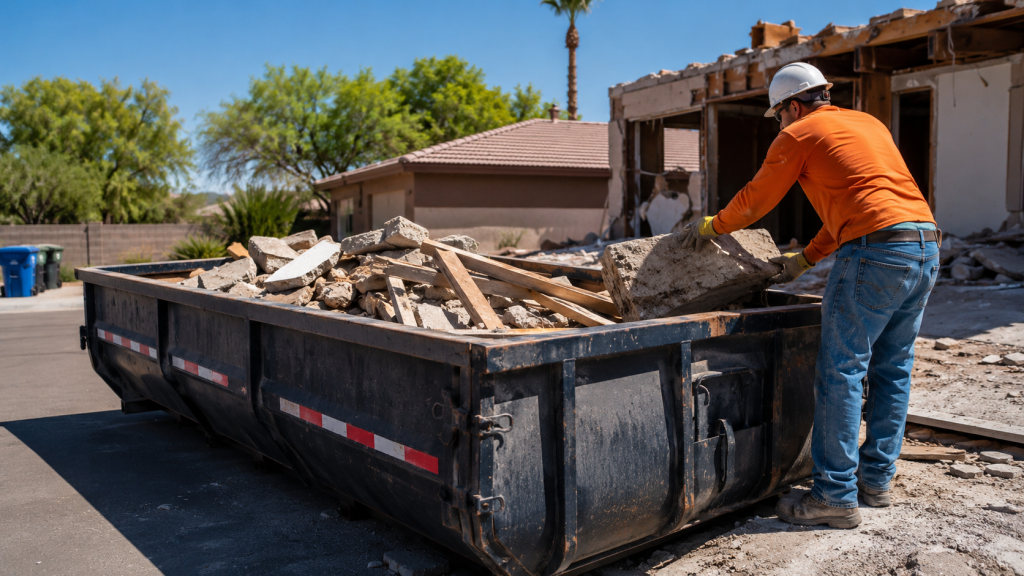
Heavy debris can turn a simple cleanup into a risky project if it is not handled correctly. Concrete, tile, brick, dirt, roofing materials, wet drywall, cabinets, flooring, and construction waste can weigh more than many homeowners and contractors expect.
Why Heavy Debris Requires Extra Planning
When debris is light, cleanup usually feels straightforward. You toss boxes, small household junk, or yard waste into a dumpster and keep moving. However, heavy debris is different because weight affects safety, loading, pricing, placement, and pickup.
That is why planning matters before scheduling Dumpster Rental in Phoenix.
A dumpster can be one of the best tools for a renovation, construction job, landscaping project, tenant turnover, or garage cleanout. However, if heavy materials are loaded the wrong way, the project can become dangerous or more expensive than expected. As a result, customers should understand weight limits, lifting safety, loading strategy, and material restrictions before they begin.
In Phoenix, Scottsdale, Paradise Valley, and North Scottsdale, heavy debris shows up in many common projects. A homeowner may remove tile during a bathroom remodel. A contractor may handle drywall, cabinets, and flooring during a renovation. A landscaper may remove dirt, rock, or pavers. Meanwhile, a property manager may need fast cleanup after tenant damage or repairs.
Because every project is different, the safest approach is to match the cleanup method to the debris type. Sometimes dumpster rental is the right choice. In other cases, Junk Removal may be better because a crew can handle the heavy lifting.
This guide explains how to safely handle heavy debris with dumpster rental in Phoenix, what materials require extra caution, how to load a dumpster correctly, and when to ask for professional help.
Understanding the Search Intent Behind Heavy Debris Dumpster Rental
People searching for heavy debris dumpster rental are usually planning a hands-on project. They may already have broken tile, concrete, flooring, roofing material, dirt, or construction debris on-site. More often than not, they want practical answers before the cleanup becomes overwhelming.
The main questions usually include:
- Can heavy debris go in a dumpster?
- How much weight can a dumpster hold?
- What size dumpster do I need?
- How do I avoid overloading the container?
- Can I put concrete, tile, dirt, or brick in a dumpster?
- Should I rent a dumpster or book junk removal?
- How do I protect my driveway?
- What safety gear should I use?
- What happens if the dumpster is too heavy?
Because these questions involve safety and cost, the answer should be direct and useful. Heavy debris can be handled efficiently, but only when the project is planned carefully.
Therefore, the best place to start is understanding what counts as heavy debris.
What Counts as Heavy Debris?
Heavy debris includes materials that add significant weight quickly, even when the dumpster does not look full. This matters because dumpsters have weight limits, trucks have hauling limits, and disposal costs can change based on weight.
Common Heavy Debris Materials
Heavy debris may include:
- Concrete
- Brick
- Tile
- Stone
- Dirt
- Rock
- Gravel
- Pavers
- Roofing shingles
- Wet drywall
- Plaster
- Cabinets
- Countertops
- Flooring
- Wood debris
- Demolition waste
- Landscaping materials
- Construction debris
Although some of these materials may look manageable, they can become heavy fast. For example, a few broken tiles may not seem like much. However, a full bathroom demolition with tile, mortar, drywall, and flooring can quickly create a dense load.
Why Weight Matters More Than Volume
Many customers judge dumpster size by how much space debris takes up. However, with heavy materials, weight is often the bigger concern.
For example, a dumpster filled halfway with concrete may be too heavy to haul safely. Meanwhile, a full dumpster of cardboard may still be relatively light.
Because of that, heavy debris should be discussed before delivery. A reliable dumpster rental company can help you understand whether the material is acceptable and how much should be loaded.
Why Heavy Debris Can Be Risky
Heavy debris creates risks during lifting, loading, hauling, and disposal. Therefore, safety should come before speed.
Injury Risks During Loading
Heavy materials can cause back strain, shoulder injuries, cuts, crushed fingers, and slips. This is especially true when debris has sharp edges, awkward shapes, or hidden nails.
For example, broken tile can cut hands. Concrete chunks can crush toes. Old cabinets may have screws or splintered wood. Wet drywall can tear apart and become difficult to grip.
Because of that, anyone loading heavy debris should wear protective gear and avoid lifting more than they can safely manage.
Overloaded Dumpster Risks
Overloading a dumpster can create serious problems. If the container is too heavy, the truck may not be able to lift or haul it safely. As a result, pickup may be delayed until debris is removed.
Additionally, heavy materials loaded unevenly can shift during transport. That can create safety concerns for the driver and others on the road.
Property Damage Risks
Heavy dumpsters can affect driveways, pavers, curbs, or parking surfaces, especially when loaded with dense materials. This is important for homes in Paradise Valley and North Scottsdale, where driveways and hardscapes may include custom concrete, stone, or pavers.
Therefore, placement and surface protection should be discussed before delivery.
Dumpster Rental vs. Junk Removal for Heavy Debris
Before choosing a cleanup method, think about how heavy the debris is and who will load it.
When Dumpster Rental Makes Sense
Dumpster rental is a strong choice when you have ongoing debris and a team that can load safely. It works well for renovations, demolition, roofing, landscaping, and construction projects.
Choose dumpster rental when:
- Debris will build up over time
- Contractors are already on-site
- You need a container for several days
- Materials can be loaded safely
- The debris is approved by the provider
- You want flexibility during the project
- You have enough space for placement
For example, if a contractor is removing old flooring in a Phoenix home, a dumpster can keep debris contained while the work continues.
When Junk Removal Is Better
Junk removal may be better when items are too heavy, bulky, or awkward for you to move safely. A crew can lift, load, and haul the items for you.
Choose junk removal when:
- You do not have help
- Items are upstairs
- Debris is too heavy to lift
- Large furniture or appliances are involved
- You need fast removal
- Safety is a concern
- You want a hands-off cleanup
For example, if you need to remove a heavy vanity, large appliances, bulky cabinets, or dense garage items, junk removal may be safer than loading everything yourself.
When You May Need Both
Many projects benefit from both services. A dumpster can handle approved construction debris, while junk removal can take care of bulky or difficult items.
For instance, during a kitchen renovation, the dumpster may handle drywall, flooring, and packaging. Meanwhile, junk removal may help with appliances, heavy cabinets, or large furniture.
Because Junk Gone AZ offers both Dumpster Rental and Junk Removal, customers can choose the safest and most practical option for each part of the project.
Common Phoenix Projects That Create Heavy Debris
Heavy debris shows up in many residential and commercial cleanup projects.
Bathroom Remodels
Bathroom remodels often create dense debris. Tile, mortar, drywall, vanities, toilets, cabinets, glass, and flooring can add weight quickly.
Because bathrooms are small, homeowners sometimes underestimate the amount of debris involved. However, once demolition begins, the debris pile can grow fast.
A dumpster can help keep the project organized, but weight limits should be discussed before loading large amounts of tile or plaster.
Kitchen Renovations
Kitchen renovations may involve cabinets, countertops, flooring, drywall, appliances, fixtures, and packaging. Some materials are bulky, while others are heavy.
For example, old countertops can be difficult to lift. Cabinets may contain nails or screws. Appliances may require special handling.
Therefore, a combined cleanup plan may work best. Dumpster rental can handle approved renovation debris, while junk removal can help with bulky appliances or large cabinets.
Flooring Removal
Flooring projects can create heavy debris depending on the material. Carpet and padding are bulky but usually lighter. Tile, stone, laminate, wood, and adhesive materials can weigh more.
Additionally, flooring removal may create dust and sharp fragments. Because of that, protective gear and careful loading are important.
Roofing Projects
Roofing debris can become heavy quickly. Shingles, underlayment, flashing, nails, wood, and other materials can add significant weight.
Contractors often use dumpsters for roofing work because debris comes down in large amounts. However, the dumpster should be sized and loaded according to weight limits.
Landscaping and Hardscape Projects
Phoenix-area landscaping often includes rock, gravel, pavers, concrete borders, dirt, and desert plants. These materials can be much heavier than normal yard waste.
If a project involves removing gravel, dirt, concrete, or stone, always ask about proper dumpster use before loading. In many cases, heavy materials require special planning.
Tenant Damage and Property Repairs
Landlords and property managers may deal with heavy debris after tenant move-outs or property damage. This can include flooring, cabinets, doors, fixtures, broken furniture, drywall, and outdoor materials.
Because turnover timelines are often tight, rapid dumpster rental can help. However, bulky or heavy items may be better handled with junk removal.
Choosing the Right Dumpster for Heavy Debris
The right dumpster depends on debris type, weight, volume, placement area, and pickup requirements.
Do Not Choose by Size Alone
A larger dumpster is not always better for heavy debris. While a big container may hold more volume, it may become too heavy before it is full.
For example, filling a large dumpster with concrete, dirt, tile, or rock may exceed safe weight limits. Therefore, the best dumpster size depends on both space and weight.
Describe Your Materials Clearly
Before booking, tell the company exactly what you are throwing away. Mention whether you have concrete, tile, brick, dirt, gravel, roofing shingles, drywall, cabinets, or mixed debris.
This helps the company recommend the right container and explain any limits.
Ask About Weight Limits
Weight limits are one of the most important details for heavy debris. Ask how much weight is included and what happens if the load exceeds that amount.
Clear answers help prevent surprise fees and pickup problems.
Ask About Mixed Loads
Some projects include both heavy and light debris. For example, a remodel may include tile, drywall, wood, boxes, and cabinets.
Ask whether mixed debris is allowed and whether certain materials should be separated. This can help avoid confusion during loading.
Safe Lifting Tips for Heavy Debris
If you plan to load the dumpster yourself, safe lifting matters. Even small pieces can cause injury when they are awkward, sharp, or repeated many times.
Wear Proper Gear
Before loading heavy debris, wear:
- Work gloves
- Closed-toe shoes or boots
- Long pants
- Eye protection
- Long sleeves when needed
- Dust protection when appropriate
Additionally, use knee pads or back support if the project requires repeated bending.
Lift With Your Legs
When lifting, bend your knees and keep the item close to your body. Avoid twisting while holding heavy debris.
Instead, turn your feet and move your whole body. This reduces strain on your back.
Break Materials Into Manageable Pieces
Large pieces may be hard to lift safely. Therefore, break materials into smaller sections when practical.
For example, cut large carpet sections into smaller rolls. Break drywall into manageable pieces. Remove cabinet doors before loading the cabinet frame.
However, do not create sharp or unstable pieces that are harder to handle.
Use Tools When Needed
Wheelbarrows, dollies, carts, pry bars, buckets, and shovels can reduce physical strain. Instead of carrying heavy debris long distances, move it with tools.
This is especially helpful for tile, brick, dirt, gravel, and landscaping materials.
Do Not Rush
Heavy debris cleanup can be tiring. Because fatigue increases injury risk, take breaks and work at a steady pace.
If the debris becomes too difficult to move safely, stop and consider junk removal.
How to Load Heavy Debris in a Dumpster
Loading strategy affects safety, space, and pickup.
Distribute Weight Evenly
Heavy debris should be spread evenly across the bottom of the dumpster. Avoid placing all dense materials in one corner.
Even weight distribution helps reduce shifting and supports safer hauling.
Keep Heavy Items Low
Place heavy materials near the bottom. Then, load lighter debris on top if allowed.
This keeps the load more stable. Additionally, it makes better use of space.
Avoid Overloading With Dense Materials
Dense materials such as concrete, dirt, tile, brick, rock, and gravel can exceed weight limits quickly. Even if the dumpster looks half empty, it may already be too heavy.
Because of that, ask the company how much heavy material can be loaded before you start.
Do Not Fill Above the Top Edge
Most dumpsters should not be loaded above the top edge. Overfilled dumpsters may be unsafe to haul.
If debris sticks out above the container, the company may require you to remove material before pickup.
Keep Walkways Clear
While loading, keep walkways, driveways, stairs, and work areas clear. This helps reduce trip hazards and keeps the project safer.
For contractors, clear paths also help crews work more efficiently.
Driveway and Property Protection for Heavy Debris Projects
Heavy debris projects need careful placement because the loaded dumpster can put pressure on surfaces.
Choose a Stable Placement Area
A dumpster should sit on a flat, stable surface with enough room for delivery and pickup. Driveways often work well, but not every driveway is ideal.
Avoid soft ground, steep slopes, fragile pavers, blocked access, or areas with low overhead clearance.
Ask About Surface Protection
If the property has decorative concrete, pavers, stone, or a high-end driveway, ask about protection options before delivery.
This is especially important in Paradise Valley and North Scottsdale, where many homes have custom surfaces and landscaping.
Keep the Area Around the Dumpster Clear
Move vehicles, tools, materials, and outdoor items before delivery. Also, make sure nothing blocks pickup access once the dumpster is full.
A clear area helps prevent delays and protects the property.
Consider Neighbor and HOA Concerns
In some neighborhoods, dumpsters should not block sidewalks, shared driveways, or public access. If your property has HOA rules, check placement guidelines before delivery.
This can prevent complaints and last-minute changes.
Heavy Debris and Phoenix Weather
Phoenix weather can affect cleanup safety. Because heavy debris often requires physical labor, heat and storms matter.
Heat Can Increase Fatigue
Heavy lifting in Phoenix heat can become dangerous quickly. Therefore, schedule loading during cooler parts of the day when possible.
Morning work is often easier than afternoon work. Additionally, drink water, take breaks, and avoid pushing through dizziness or exhaustion.
Dust Can Affect Visibility and Breathing
Demolition debris, dirt, drywall, and concrete can create dust. Because of that, eye protection and dust masks may be useful during loading.
If dust becomes heavy or materials are questionable, stop and reassess the cleanup plan.
Storms Can Add Weight
Rain can make debris heavier. Wet drywall, carpet, wood, soil, and yard debris can weigh much more than dry materials.
Therefore, if debris gets wet before loading or pickup, ask whether it affects the project.
What Heavy Debris Can Usually Go in a Dumpster?
Accepted items vary by provider, so customers should always ask first. Still, many dumpster rentals can handle approved construction, renovation, and cleanup debris.
Common Materials That May Be Accepted
Depending on the project and provider, a dumpster may accept:
- Wood
- Drywall
- Flooring
- Cabinets
- Roofing debris
- Tile
- Brick
- Concrete
- Yard debris
- Construction debris
- Remodeling materials
- Non-hazardous demolition waste
However, heavy materials may have specific loading limits. Therefore, customers should confirm before placing dense debris in the container.
Items That May Need Special Handling
Some items should not go in a standard dumpster or may require special disposal.
These may include:
- Paint
- Chemicals
- Fuel
- Propane tanks
- Batteries
- Pool chemicals
- Pesticides
- Tires
- Liquids
- Hazardous waste
- Certain electronics
- Medical waste
- Some appliances
Because these items can create safety or disposal issues, keep them separate until proper handling is confirmed.
Safety Planning for Contractors
Contractors often handle heavy debris more frequently than homeowners. However, even experienced crews benefit from a clear plan.
Communicate Loading Rules
Before work begins, make sure crews know what can go in the dumpster, what must stay out, and how high the dumpster can be loaded.
This prevents mistakes and helps avoid pickup delays.
Assign a Debris Area
A central debris area keeps the job site cleaner. When the dumpster is close enough to be useful but not in the way, crews can work more efficiently.
Watch Weight During Demolition
Heavy materials can accumulate quickly during demolition. Therefore, monitor the dumpster as loading continues.
If the load is getting dense, contact the rental company before continuing.
Protect the Client’s Property
Contractors should consider driveway protection, access, and surface concerns. This matters because the dumpster company’s service affects the client’s overall project experience.
A clean, safe job site reflects well on the contractor.
Safety Planning for Homeowners
Homeowners may not be used to handling heavy debris. Therefore, preparation matters even more.
Be Honest About Your Limits
Some debris is too heavy for one person to move safely. If you are unsure, do not force it.
Instead, ask for help or schedule junk removal for the heavy items.
Sort Before Loading
Separate heavy debris from light debris. Also, set aside restricted items such as paint, chemicals, batteries, electronics, and liquids.
This makes loading easier and prevents mistakes.
Use Smaller Containers for Carrying
Rather than carrying large loads, use smaller buckets or bins for tile pieces, dirt, or small debris. This reduces strain and makes each trip safer.
Stop If Conditions Feel Unsafe
If debris is unstable, sharp, moldy, contaminated, or too heavy, stop and reassess. Safety should always come before speed.
Heavy Debris Cleanup for Property Managers and Landlords
Rental properties often create unexpected heavy debris after tenant move-outs, repairs, or damage.
Tenant Move-Out Repairs
After a tenant leaves, landlords may need to remove damaged flooring, broken doors, cabinets, furniture, appliances, or yard materials.
A dumpster can help with general repair debris. However, junk removal may be better for heavy furniture or appliances.
Fast Turnovers Matter
Every delay can affect rent-ready timelines. Therefore, rapid dumpster rental can help property managers clear debris quickly and move into repairs.
Multi-Family Properties Need Careful Placement
Apartments and shared properties may have limited space. Placement should not block tenants, fire lanes, parking, sidewalks, or service areas.
In these situations, junk removal may be easier for bulky items inside units.
Heavy Debris Cleanup for Businesses
Businesses may deal with heavy debris during renovations, office moves, warehouse cleanouts, or commercial repairs.
Office and Retail Renovations
Commercial renovations may create drywall, flooring, shelving, fixtures, displays, packaging, and cabinetry debris.
A dumpster helps keep the project organized. Additionally, scheduled pickup can reduce disruption to customers and employees.
Warehouse Cleanouts
Warehouse debris may include pallets, shelving, damaged goods, packaging, equipment parts, and heavy materials.
Because some materials may be bulky or dense, businesses should discuss the debris type before scheduling.
Customer Access Matters
A dumpster should not block entrances, loading zones, parking areas, or emergency access. Therefore, commercial placement should be planned carefully.
Local Considerations in Phoenix, Scottsdale, Paradise Valley, and North Scottsdale
Different properties across the Valley may require different cleanup plans.
Phoenix
Phoenix homeowners, contractors, and businesses often need dumpsters for renovations, tenant move-outs, yard projects, and construction debris.
Because cleanup timelines can be tight, fast service and clear guidance help projects move smoothly.
Scottsdale
Scottsdale projects often involve residential renovations, commercial cleanouts, and property upgrades. Therefore, clean placement and reliable pickup matter.
If heavy furniture or office items are involved, junk removal may also be helpful.
Paradise Valley
Paradise Valley properties often include high-end driveways, pavers, gates, and landscaping. Because of that, dumpster placement and surface protection are especially important.
Heavy debris projects in this area should be planned with care.
North Scottsdale
North Scottsdale homes may include larger garages, outdoor living spaces, remodeling projects, and landscaping work. As a result, cleanup may involve both heavy construction debris and bulky junk.
Flexible service can help customers choose the safest option.
Red Flags to Avoid With Heavy Debris Dumpster Rental
Choosing the wrong provider can create costly problems.
No Questions About Debris Type
A reliable company should ask what you are loading. If no one asks whether you have concrete, tile, dirt, roofing debris, or mixed materials, that is a warning sign.
Vague Weight Limits
Heavy debris requires clear weight guidance. If a company cannot explain weight limits or extra charges, be cautious.
Poor Placement Planning
The provider should discuss where the dumpster will go and whether the surface is suitable. This matters even more for heavy loads.
No Prohibited Item Guidance
A good company should explain what cannot go in the dumpster. Heavy debris projects often include mixed materials, so restrictions matter.
Weak Communication
If the company is hard to reach before booking, it may be hard to reach if pickup issues arise.
Because heavy debris requires coordination, communication is important.
A Heavy Debris Dumpster Rental Checklist
Before booking, use this quick checklist.
Before Scheduling
Ask yourself:
- What materials am I removing?
- Are they heavy, bulky, or sharp?
- Will debris be wet?
- Can I load safely?
- Do I need junk removal?
- Do I have space for a dumpster?
- Are there driveway concerns?
- Are any items restricted?
Then, share those answers with the dumpster rental company.
Before Delivery
Prepare by:
- Clearing the placement area
- Moving vehicles and obstacles
- Checking overhead clearance
- Protecting sensitive surfaces
- Separating restricted items
- Gathering safety gear
- Planning a loading path
This preparation helps delivery and loading go smoother.
During Loading
Remember to:
- Spread weight evenly
- Keep heavy items low
- Avoid overfilling
- Take breaks
- Use tools when needed
- Keep paths clear
- Stop if something feels unsafe
Because safety matters, do not rush the process.
Why Junk Gone AZ Is a Smart Choice for Heavy Debris Cleanup
Junk Gone AZ provides dumpster rental and junk removal for residential and commercial customers throughout Phoenix, Scottsdale, Paradise Valley, and North Scottsdale.
Because heavy debris projects require planning, customers benefit from clear communication and flexible service options.
Dumpster Rental for Renovation and Construction Debris
Dumpster rental works well for approved demolition debris, renovation waste, flooring, cabinets, wood, drywall, roofing materials, yard debris, and general cleanup projects.
With the right plan, a dumpster can help keep heavy debris contained and organized.
Junk Removal for Heavy and Bulky Items
When debris is too heavy or awkward to load safely, Junk Gone AZ can help with full-service junk removal. The crew can remove furniture, appliances, bulky items, office equipment, patio items, and other difficult materials.
This can save time and reduce physical strain.
Local Service With Practical Guidance
Junk Gone AZ understands Phoenix-area cleanup needs. Whether you are remodeling a Phoenix home, managing repairs in Scottsdale, protecting a Paradise Valley driveway, or clearing heavy debris in North Scottsdale, the team can help you choose the right cleanup solution.
A safer cleanup method starts with knowing what you are loading and choosing the service that fits.
Conclusion: Heavy Debris Cleanup Starts With Safety
Heavy debris can be handled efficiently with dumpster rental, but it needs the right plan. Concrete, tile, dirt, brick, roofing materials, wet drywall, cabinets, and construction waste can become heavy quickly, even when the dumpster is not full.
Therefore, customers should discuss debris type, weight limits, placement, and loading rules before scheduling service. Additionally, safe lifting, protective gear, even weight distribution, and clear loading paths can help prevent injuries and delays.
In many cases, Dumpster Rental in Phoenix is the right choice for ongoing renovation, construction, landscaping, and repair debris. However, Junk Removal may be safer when items are bulky, awkward, or too heavy to move without help.
Ultimately, the safest cleanup is the one that respects weight, protects the property, and uses the right service for the job. With Junk Gone AZ, homeowners, contractors, landlords, property managers, and businesses throughout Phoenix, Scottsdale, Paradise Valley, and North Scottsdale can get flexible cleanup support that fits the project.
FAQs About Heavy Debris and Dumpster Rental in Phoenix
Can heavy debris go in a rental dumpster?
Yes, many types of heavy debris may go in a rental dumpster if the provider allows them. However, weight limits matter, so always describe your materials before loading.
What types of debris are considered heavy?
Heavy debris may include concrete, tile, brick, dirt, rock, gravel, pavers, roofing shingles, wet drywall, plaster, cabinets, countertops, and construction waste.
Can I fill a dumpster with concrete or dirt?
You should ask before loading concrete or dirt. These materials are extremely heavy and may have strict loading limits, even if the dumpster has space left.
How do I avoid overloading a dumpster?
Spread heavy materials evenly, keep dense debris low, avoid filling the container above the top edge, and ask about weight limits before loading.
Is junk removal better for heavy debris?
Junk removal may be better if items are too heavy, bulky, or awkward to move safely. A crew can handle lifting and loading, which reduces physical strain.
Can roofing shingles go in a dumpster?
Roofing shingles may be accepted by many dumpster rental providers, but they are heavy. Therefore, ask about weight limits before loading roofing debris.
Can a heavy dumpster damage my driveway?
A heavily loaded dumpster can affect sensitive surfaces if placement is not planned carefully. If you have pavers, decorative concrete, or a high-end driveway, ask about surface protection.
What safety gear should I use when loading heavy debris?
Use work gloves, sturdy closed-toe shoes or boots, eye protection, long pants, and dust protection when needed. For sharp or dusty materials, extra protection is helpful.
What should not go in a dumpster?
Paint, chemicals, fuel, propane tanks, batteries, pool chemicals, pesticides, tires, liquids, hazardous waste, certain electronics, medical waste, and some appliances may require special handling.
Does Junk Gone AZ offer both dumpster rental and junk removal?
Yes. Junk Gone AZ offers dumpster rental and junk removal for residential and commercial customers in Phoenix, Scottsdale, Paradise Valley, and North Scottsdale.
Schedule Dumpster Rental for Your Phoenix Home Renovation
A reliable dumpster rental can help you safely manage heavy renovation debris, protect your property, and keep your cleanup moving without unnecessary delays.
Contact Junk Gone AZ for fast, reliable service in Phoenix, Scottsdale, Paradise Valley, and North Scottsdale.