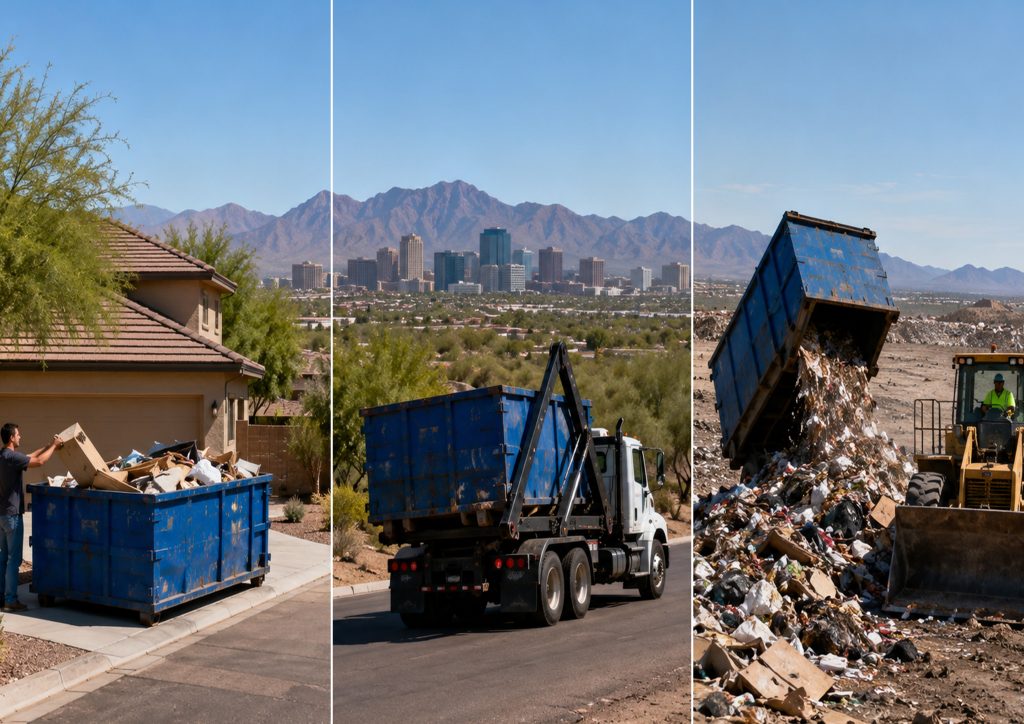
When you rent a dumpster for a home cleanout, renovation, construction project, or business cleanup, your main goal is usually simple: get the mess out of the way. However, the story does not end when the dumpster leaves your driveway, job site, or commercial property.
Instead, your trash moves through a larger waste management process.
For homeowners, contractors, landlords, property managers, real estate investors, and business owners in Phoenix, Scottsdale, Paradise Valley, and North Scottsdale, understanding that process can help you make better cleanup decisions. In addition, it can help you choose the right Dumpster Rental service, avoid disposal mistakes, and keep your project running smoothly.
A professional dumpster rental company does more than drop off a container. Rather, it helps you contain debris, choose the right size, avoid restricted materials, reduce unnecessary hauling, and manage cleanup in a safer, more organized way.
Because every project creates a different type of waste, the path your trash takes can vary. Still, the basic lifecycle follows a clear pattern: debris is created, loaded, hauled, processed, and handled according to material type.
Junk Gone AZ provides fast, reliable Dumpster Rental and Junk Removal services for residential and commercial customers across the Phoenix area. Whether you are remodeling a kitchen, clearing an estate, cleaning out a garage, or managing construction debris, knowing where your trash goes can make the entire process easier to understand.
Why the Lifecycle of Dumpster Rental Matters
Most people think of trash removal as a simple before-and-after process. First, the junk sits on your property. Then, a truck hauls the dumpster away, and the mess disappears from your view.
However, waste removal includes several important steps.
The materials in your dumpster may include household junk, furniture, drywall, flooring, yard debris, packaging, cabinets, wood, construction debris, or other non-hazardous materials. Depending on the project, disposal teams may handle some items as regular debris, separate others, and route certain materials for special handling.
Because of that, the lifecycle of dumpster rental matters.
It helps customers:
- Choose the right dumpster size
- Load materials more safely
- Avoid restricted items
- Reduce unnecessary hauling
- Understand why sorting matters
- Keep renovation sites cleaner
- Support better disposal practices
- Decide when junk removal may be better
In addition, understanding the lifecycle helps people avoid one of the most common mistakes: treating every item as regular trash. Paint, chemicals, batteries, tires, certain electronics, refrigerants, and hazardous materials may need separate handling. Therefore, asking questions before loading can prevent problems later.
Phoenix Public Works provides trash, recycling, and waste diversion services to more than 420,000 households, and its Solid Waste division oversees transfer stations, materials recovery facilities, a compost facility, closed landfills, and an active landfill. Because of that, local waste management involves more than simply taking trash “away.”
Step 1: Your Project Creates Waste
Every dumpster rental starts with a project.
For a homeowner, that project might be a garage cleanout, bathroom remodel, kitchen renovation, yard cleanup, or moving cleanout. Meanwhile, a contractor may be dealing with demolition debris, flooring removal, drywall, cabinets, trim, and packaging.
Business owners often create a different type of waste. For example, an office remodel may involve desks, chairs, cubicles, carpet, shelving, and old fixtures. Similarly, a retail cleanup may include displays, signage, packaging, and light construction debris.
Because each project is different, the materials in the dumpster will also be different.
A residential cleanout may include:
- Boxes
- Furniture
- Clothing
- Household junk
- Old décor
- Storage items
- Garage clutter
- Yard debris
- Broken appliances
- Moving materials
A renovation project may include:
- Drywall
- Wood
- Flooring
- Carpet
- Cabinets
- Countertops
- Tile
- Trim
- Doors
- Fixtures
- Packaging
A commercial project may include:
- Office furniture
- Shelving
- Displays
- Construction debris
- Tenant improvement materials
- Warehouse items
- Carpet
- Cubicles
- Non-hazardous business junk
Because the waste type affects the best cleanup plan, it helps to identify materials before scheduling service. That way, Junk Gone AZ can help you decide whether Residential Dumpster Rental, Commercial Dumpster Rental, Junk Removal, or a combination of services makes the most sense.
Step 2: You Choose the Right Cleanup Service
Once you know what needs to leave the property, the next step is choosing the right cleanup service.
Dumpster rental works well when debris will build up over time. For example, a home renovation may produce waste in phases. Crews may remove cabinets first, then pull flooring, drywall, trim, and packaging as the project continues.
In that situation, a dumpster gives your crew one central place to load debris as the work moves forward.
Junk removal, on the other hand, works better when you want hands-off help. With Full-Service Junk Removal, a crew removes the items, loads them, and hauls everything away. This is especially useful for bulky furniture, appliances, mattresses, office furniture, estate cleanouts, and items that are difficult to move safely.
When Dumpster Rental Makes Sense
Dumpster rental is usually the better choice when:
- Debris will build up over several hours or days
- Contractors are already on-site
- You want to load at your own pace
- The project includes remodeling or construction debris
- You need one central disposal location
- You want to avoid repeated dump runs
- The cleanup involves yard debris, flooring, cabinets, or drywall
For example, a Phoenix homeowner replacing flooring throughout several rooms may benefit from having a dumpster in the driveway. As work continues, the old flooring and packaging can go directly into the container.
When Junk Removal Makes Sense
Junk removal is often better when:
- You need items removed quickly
- You do not want to lift or load anything
- Items are bulky, heavy, or awkward
- The property needs to be cleared in one visit
- Furniture or appliances need removal
- Employees or family members should not handle debris
- You are dealing with an estate, rental property, or office cleanout
For instance, a property manager in Scottsdale may choose junk removal when a tenant leaves behind couches, mattresses, tables, and large household items. Instead of asking maintenance workers to move everything, a junk removal crew can handle the heavy lifting.
When Both Services Work Together
Many larger projects benefit from both services.
A Paradise Valley estate cleanout may begin with junk removal for oversized furniture, appliances, and heavy décor. Afterward, a dumpster can remain on-site for smaller debris, garage clutter, renovation waste, and yard materials.
Similarly, a North Scottsdale renovation may need junk removal before demolition begins. Then, dumpster rental can support the project while contractors remove cabinets, flooring, drywall, and trim.
This combined approach creates a cleaner and more efficient cleanup plan.
Step 3: The Dumpster Size Is Matched to the Job
After choosing dumpster rental, the next step is selecting the right size.
Dumpster sizing matters because waste is not only about volume. Weight matters too. Bulky items can fill a dumpster quickly, while heavy materials can create weight concerns before the container looks full.
For example, furniture, cabinets, carpet, boxes, and palm fronds are bulky. Meanwhile, tile, concrete, brick, dirt, stone, and countertops are heavy. Therefore, a garage cleanout and a tile demolition project may require different planning, even if both seem similar in size.
A professional dumpster rental service helps customers think through:
- Project type
- Amount of debris
- Material weight
- Bulky items
- Loading method
- Placement location
- Timeline
- Pickup needs
- Whether junk removal would help
Choosing a dumpster that is too small can lead to extra pickups or delays. However, choosing one that is too large may create placement problems, especially at homes with tight driveways, decorative pavers, gates, or HOA rules.
Because of that, the best choice is not always the biggest dumpster. Instead, it is the dumpster that fits the project, the property, and the debris.
Step 4: Junk Gone AZ Delivers the Dumpster to the Property
After you schedule the dumpster, delivery becomes the next major step.
Placement matters more than many people realize. A dumpster should sit close enough for easy loading, yet it should not block driveways, garages, sidewalks, gates, customer parking, fire lanes, service entrances, contractor access, or neighbor access.
For residential projects, driveways often provide the most practical location. However, properties in Scottsdale, Paradise Valley, and North Scottsdale may need extra planning because of gated entries, decorative pavers, HOA guidelines, landscaping, circular driveways, or limited turnaround space.
Before delivery, clear:
- Cars
- Trash bins
- Bikes
- Tools
- Landscaping materials
- Construction supplies
- Patio furniture
- Storage items
- Anything blocking the placement area
Additionally, look for low branches, overhead wires, narrow gates, and tight turns before the truck arrives.
Good placement keeps the cleanup process efficient. It also reduces the chance that debris will pile up temporarily in the wrong places.
Step 5: You Load the Dumpster Safely and Efficiently
Once the dumpster arrives, loading begins.
Although loading may seem simple, a good loading plan makes a major difference. When people toss items randomly, the dumpster fills faster. However, when they load materials with care, they use space more efficiently.
Helpful loading tips include:
- Load flat materials first when possible
- Break down boxes, shelving, and small furniture
- Distribute heavy materials evenly
- Keep restricted items out
- Avoid loading above the top edge
- Place bulky items carefully
- Keep pathways clear
- Use gloves and closed-toe shoes
- Avoid lifting heavy items alone
For renovation debris, it may help to load wood, flooring, and drywall in a more organized way. During garage cleanouts, breaking down boxes and shelving can save space. For yard debris, trimming branches or flattening bulky materials may also help.
However, safety should always come first. If an item is too heavy, awkward, or risky to move, junk removal may be the better option.
Step 6: Some Items Must Stay Out of the Dumpster
Not everything can go into a standard dumpster.
This step matters because some items can create safety, environmental, or disposal problems. For example, old paint, chemicals, oils, batteries, tires, electronics, refrigerants, and hazardous materials may require separate handling.
Items that may need special handling include:
- Paint
- Chemicals
- Oils
- Batteries
- Tires
- Certain electronics
- Refrigerants
- Hazardous waste
- Medical waste
- Asbestos-containing materials
- Some appliances
The City of Phoenix states that household hazardous waste should not go in trash or recycling containers for safety reasons, and the city offers a program to help residential solid waste customers with proper household hazardous waste disposal.
Because of that, customers should ask before loading anything questionable. This is especially important during garage cleanouts, estate cleanouts, older home renovations, and commercial cleanups.
For example, a garage in Phoenix may contain old paint, pool chemicals, motor oil, pesticides, batteries, and outdated electronics. Instead of placing those items into the dumpster, set them aside and ask how they should be handled.
By separating these items early, you help prevent disposal issues later in the lifecycle.
Step 7: Junk Gone AZ Picks Up the Dumpster
After you finish loading the dumpster, schedule pickup.
At this stage, the load needs to meet safe hauling conditions. Keep materials below the top edge, load heavy items evenly, and make sure access to the dumpster stays clear.
Before pickup, check that:
- The area around the dumpster is clear
- No vehicles block access
- The dumpster is not overfilled
- Restricted items have not been loaded
- Gates are open if needed
- The pickup path is accessible
- Loose debris around the container has been cleaned up
If you overfill the dumpster, pickup may take longer. Similarly, if a vehicle blocks the container, the driver may not be able to access it.
Therefore, a little preparation before pickup keeps the process smooth.
Step 8: The Waste Enters the Local Disposal System
After pickup, the debris enters the broader waste management system.
Depending on the material type, service provider, and disposal requirements, waste may move through transfer stations, recycling operations, construction and demolition debris sites, or landfills. Phoenix Public Works describes transfer stations and materials recovery facilities as part of the city’s waste disposal and recycling system.
In simple terms, a transfer station helps consolidate waste before it moves to another destination. Materials recovery facilities, often called MRFs, process recyclable materials.
For dumpster rental customers, the important takeaway is clear: the dumpster does not simply disappear into nowhere. Instead, the materials become part of a larger process that depends on sorting, disposal rules, facility capabilities, and material type.
That is why responsible loading matters. When customers keep hazardous or restricted materials out of the dumpster, they help prevent problems later in the lifecycle.
Step 9: Some Materials May Be Sorted or Diverted
Not every item follows the same path.
Some materials may be suitable for recycling, reuse, donation, or special handling. However, this depends on the item, condition, contamination, local options, and project type.
For example, clean cardboard may follow a different path than mixed demolition debris. Metal may have different options than broken furniture. Yard debris may require different handling than drywall or carpet. Meanwhile, hazardous materials need separate handling and should not mix with general debris.
Because of that, sorting before loading helps.
Useful sorting categories include:
- Keep
- Donate
- Sell
- Recycle
- Shred
- Junk removal
- Dumpster
- Special handling
Good sorting creates better insight throughout the cleanup process. It also keeps valuable, reusable, or restricted items from mixing into general debris.
For homeowners, this may mean setting aside usable furniture before loading the dumpster. For contractors, it may mean separating heavy materials or asking about construction debris. Likewise, property managers may need to remove hazardous garage items before maintenance crews begin loading.
Step 10: Final Disposal Happens According to Material Type
Eventually, materials reach their final destination.
Some waste may go to a landfill. Other materials may move through specialized facilities. In addition, some items may require special handling because regular trash systems cannot manage them safely.
Construction and demolition debris may follow a different path than regular household junk. ADEQ explains that construction and demolition debris landfills commonly accept solid waste from construction, repair, remodeling, or demolition of buildings and other structures.
Arizona’s Solid Waste Program also issues permits, licenses, and certifications to solid waste facilities and conducts inspections to support compliance.
For customers, this means proper waste handling matters before the dumpster ever leaves the property. Once materials mix together incorrectly, disposal teams may have fewer options.
That is why professional guidance helps. When you ask questions before loading, you reduce the chance of sending the wrong materials into the wrong disposal path.
What Happens to Renovation Debris?
Renovation debris is one of the most common reasons people rent dumpsters in Phoenix.
A remodel may produce:
- Drywall
- Wood
- Tile
- Cabinets
- Countertops
- Flooring
- Carpet
- Trim
- Doors
- Fixtures
- Packaging
- Non-hazardous construction debris
Because these materials usually come out in stages, dumpster rental often works better than DIY hauling.
During a kitchen remodel, for example, cabinets may come out first. Then, countertops, flooring, backsplash, drywall, fixtures, and packaging may follow. Without a dumpster, debris may pile up around the home and create a mess that someone has to move again.
With a dumpster on-site, crews can place debris directly into the container as work progresses. Therefore, the renovation stays cleaner, safer, and more organized.
For contractors, this is especially helpful. It reduces downtime and keeps crews focused on the job.
What Happens to Furniture and Household Junk?
Furniture and household junk can follow different paths depending on condition, size, and service type.
If furniture is broken, heavily worn, or damaged, it may become disposal material. However, if items are still usable, homeowners may decide to donate, sell, or give them away before loading anything into the dumpster.
Junk removal can be especially helpful for furniture because large items are difficult to lift and load. A professional crew can remove couches, mattresses, tables, chairs, dressers, shelving, and other bulky items without requiring the homeowner to do the heavy work.
This is useful during:
- Moving cleanouts
- Estate cleanouts
- Garage cleanouts
- Rental property turnovers
- Office cleanouts
- Downsizing projects
- Luxury home decluttering
If you are unsure whether furniture should go in a dumpster or leave through junk removal, ask Junk Gone AZ before scheduling. The right choice depends on the item, the property, and how much labor you want to handle yourself.
What Happens to Yard Debris?
Phoenix-area homes often produce a lot of outdoor debris.
Yard debris may include:
- Branches
- Shrubs
- Palm fronds
- Old fencing
- Outdoor furniture
- Broken planters
- Wood
- Patio materials
- Landscape edging
- Yard cleanup waste
Although yard debris may seem light, it can fill a dumpster quickly. Palm fronds, branches, and fencing can take up more space than expected, even when they are not extremely heavy.
Dumpster rental works well when yard debris comes from a landscaping project over time. However, junk removal may work better if everything already sits in one pile and is ready to go.
For Scottsdale, Paradise Valley, and North Scottsdale homes with outdoor living spaces, a dumpster can help keep yards, patios, and driveways cleaner during larger projects.
What Happens to Construction and Commercial Debris?
Commercial cleanouts and construction projects often produce larger, heavier debris loads.
A commercial dumpster may help with:
- Office remodels
- Retail renovations
- Tenant improvements
- Restaurant updates
- Warehouse cleanouts
- Construction debris
- Flooring removal
- Display removal
- Packaging
- Light demolition debris
Commercial Dumpster Rental helps businesses and contractors keep waste contained while work continues. Instead of leaving debris in hallways, parking lots, storage rooms, or job sites, crews can place materials directly into a dumpster.
This helps protect employees, customers, tenants, and workers from unnecessary hazards. In addition, it keeps projects moving more efficiently.
For Phoenix and Scottsdale businesses, professional cleanup also protects appearance. A clean, organized property creates a better impression during renovations or transitions.
Why Sorting Matters Before the Dumpster Leaves
Sorting may feel like an extra step, but it makes the entire lifecycle cleaner.
When people separate materials early, they keep more control over the project. Usable items can go to donation. Documents can go to shredding. Hazardous items can stay separate. Bulky items can leave through junk removal. Renovation debris can go into the dumpster when appropriate.
However, when everything mixes together, options become limited.
Before loading, take time to separate:
- Donation items
- Personal documents
- Electronics
- Paint and chemicals
- Batteries
- Appliances
- Usable furniture
- Heavy debris
- General junk
- Renovation debris
This step matters during estate cleanouts, luxury home decluttering, rental turnovers, and full-house cleanouts.
Ultimately, sorting helps prevent mistakes. It also keeps valuable, sensitive, or restricted items from being thrown away accidentally.
Why DIY Disposal Changes the Lifecycle
DIY disposal creates a different waste removal lifecycle.
Instead of one dumpster arriving and leaving with the debris, DIY cleanup often involves several smaller trips. A homeowner or worker loads a truck, drives to a disposal location, unloads, returns, and repeats the process.
This may work for very small projects. However, larger cleanouts often become inefficient.
DIY disposal can lead to:
- More vehicle trips
- More time spent hauling
- Extra fuel use
- Vehicle damage
- Unsafe loading
- Poor sorting
- Confusion about restricted items
- Delays in the main project
By contrast, professional dumpster rental keeps debris centralized. As a result, the project stays more organized, and workers spend less time leaving the site.
For homeowners and contractors in Phoenix, this can save hours of effort.
The Role of Same Day Dumpster Rental
Projects do not always go as planned.
A tenant may leave behind more junk than expected. A contractor may create demolition debris faster than planned. A homeowner may decide to clean out the garage during a remodel. Meanwhile, a business may need a space cleared before reopening.
In these situations, Same Day Dumpster Rental can help prevent debris from piling up.
Fast service is useful for:
- Emergency cleanouts
- Rental property turnovers
- Contractor schedule changes
- Estate cleanouts
- Moving deadlines
- Garage cleanouts
- Renovation debris
- Commercial cleanup
- Real estate preparation
When debris leaves quickly, the rest of the project can move forward. In addition, fast service helps prevent loose waste from spreading around the property.
How the Dumpster Lifecycle Supports Cleaner Job Sites
A clean job site is safer and more efficient.
When debris scatters, workers must step around materials, move piles repeatedly, and spend more time managing clutter. This slows the project and increases the risk of injury.
A dumpster supports a cleaner site by giving workers a clear place for debris.
This helps with:
- Renovations
- Demolition
- Construction
- Flooring replacement
- Cabinet removal
- Yard cleanup
- Rental turnovers
- Commercial remodeling
For contractors, that means better workflow. For homeowners, it means less mess. For business owners, it means less disruption.
The lifecycle begins with containment. Once the waste stays contained, every later step becomes easier.
Dumpster Rental in Phoenix: Local Cleanup Needs
Phoenix projects often involve heat, dust, wind, garages, side yards, patios, rental homes, older properties, and active remodeling schedules.
Because of that, waste can become hard to manage without a clear plan.
Dumpster rental in Phoenix is useful for:
- Garage cleanouts
- Kitchen renovations
- Bathroom remodels
- Moving cleanouts
- Yard debris
- Rental property turnovers
- Estate cleanouts
- Flooring removal
- Commercial projects
Since Phoenix weather can be demanding, keeping debris contained is especially helpful. Lightweight materials, cardboard, and yard debris can spread quickly if people leave them loose.
Dumpster Rental in Scottsdale
Scottsdale properties often require clean presentation and careful planning.
Homeowners, businesses, and property managers may need dumpster rental for:
- Retail remodels
- Office cleanouts
- Garage cleanouts
- Kitchen renovations
- Bathroom updates
- Moving preparation
- Rental property cleanup
- Outdoor debris
Since some Scottsdale communities may have HOA rules, shared parking areas, or appearance standards, placement should be discussed before delivery.
With a good plan, dumpster rental supports cleanup without disrupting the property.
Dumpster Rental in Paradise Valley
Paradise Valley projects often involve larger homes, luxury renovations, estate cleanouts, and high-end outdoor spaces.
Because these properties may have custom finishes, decorative driveways, gated access, and larger debris loads, cleanup should be planned carefully.
Dumpster rental can support:
- Estate cleanouts
- Luxury home renovations
- Garage cleanouts
- Outdoor living projects
- Landscaping debris
- Whole-home decluttering
- Moving and downsizing
- Contractor-led remodeling
For bulky furniture, appliances, décor, or heavy items, junk removal may be a better first step. Then, a dumpster can support ongoing debris.
Dumpster Rental in North Scottsdale
North Scottsdale projects often involve larger residential renovations, custom homes, outdoor living areas, and multi-room updates.
Dumpster rental in North Scottsdale can help with:
- Flooring replacement
- Kitchen remodels
- Bathroom renovations
- Garage cleanouts
- Yard debris
- Outdoor renovations
- Moving cleanouts
- Whole-home improvements
Because these projects can create significant debris, selecting the right dumpster size is important. Also, placement should account for driveways, gates, contractor access, and neighborhood expectations.
What Customers Can Do to Improve the Waste Lifecycle
Customers play an important role in how smoothly dumpster rental works.
Even with professional service, better preparation leads to better results.
Plan Before Loading
Before the dumpster arrives, walk through the property and identify what needs to go. Then, separate items that should be donated, shredded, recycled, or handled specially.
Ask About Restricted Items
If you are unsure whether something can go into the dumpster, ask first. This is especially important for paint, chemicals, batteries, electronics, tires, and appliances.
Choose the Right Size
A properly sized dumpster reduces extra pickups and prevents overflow. Therefore, describe your project clearly when scheduling.
Load Safely
Distribute weight evenly, break down bulky items when safe, and avoid overfilling. Also, keep children and pets away from the loading area.
Consider Junk Removal
If you do not want to load heavy items yourself, junk removal may be the better option. This is especially true for furniture, appliances, mattresses, and estate cleanouts.
Keep Access Clear
Before pickup, make sure cars, gates, bins, and materials do not block the dumpster.
Why Professional Guidance Matters
Professional guidance makes the dumpster rental lifecycle smoother from beginning to end.
Instead of guessing, customers can ask about size, placement, materials, heavy debris, junk removal options, and timing. This helps prevent mistakes before they happen.
Junk Gone AZ helps customers think through:
- Project type
- Dumpster size
- Debris volume
- Heavy materials
- Bulky items
- Placement
- Same-day needs
- Junk removal support
- Residential or commercial needs
Because cleanup projects vary so much, this guidance is valuable. A small Phoenix garage cleanout does not need the same plan as a Paradise Valley estate cleanout or a North Scottsdale renovation.
Why Choose Junk Gone AZ
Junk Gone AZ provides fast, reliable Dumpster Rental and Junk Removal services throughout Phoenix, Scottsdale, Paradise Valley, and North Scottsdale.
Whether you are clearing a home, remodeling a property, managing construction debris, preparing a rental home, or cleaning out a business, Junk Gone AZ helps you choose the right cleanup solution.
Customers choose Junk Gone AZ for:
- Residential Dumpster Rental
- Commercial Dumpster Rental
- Same Day Dumpster Rental availability
- Full-Service Junk Removal
- Help choosing the right dumpster size
- Fast service in Phoenix and Scottsdale
- Careful support in Paradise Valley
- Flexible options in North Scottsdale
- Reliable cleanup solutions for homeowners and contractors
- Support for landlords, property managers, and business owners
Instead of wondering where your trash goes or how to handle it, you can work with a local team that understands the full cleanup process.
Conclusion
The lifecycle of dumpster rental in Phoenix begins before the dumpster arrives and continues after it leaves your property.
First, your project creates debris. Then, you choose the right cleanup service, select the right dumpster size, prepare the placement area, load materials safely, keep restricted items out, and schedule pickup. After that, the waste enters the local disposal system, where materials may follow different paths depending on type, condition, and disposal requirements.
Understanding this lifecycle helps you make better decisions. It also helps keep your property cleaner, safer, and more organized.
Whether you are planning a renovation in Phoenix, clearing a luxury estate in Paradise Valley, managing a rental turnover in Scottsdale, or handling a residential project in North Scottsdale, Junk Gone AZ can help you manage debris from start to finish.
FAQs About the Dumpster Rental Lifecycle in Phoenix
Where does trash go after a dumpster is picked up?
After pickup, debris enters the broader local waste management system. Depending on the type of material and disposal requirements, it may move through transfer stations, recycling operations, construction and demolition debris facilities, or landfills.
Does everything in a dumpster go to the landfill?
Not necessarily. Some materials may be handled differently depending on local options, material type, condition, and contamination. However, customers should not assume every item will be recycled. Sorting items before loading is the best way to keep usable or special-handling materials separate.
What should not go in a dumpster?
Paint, chemicals, oils, batteries, tires, hazardous waste, medical waste, certain electronics, refrigerants, asbestos-containing materials, and some appliances may require special handling. When in doubt, ask before loading.
Why does dumpster size matter?
Dumpster size affects efficiency, safety, and pickup. A dumpster that is too small may require extra pickups, while one that is too large may create placement problems. The right size depends on debris volume, material type, weight, and project scope.
Is dumpster rental better than DIY hauling?
For larger projects, dumpster rental usually works better than DIY hauling. It reduces repeated trips, keeps debris contained, and helps the project stay organized. However, very small cleanups may still be manageable without a dumpster.
When should I choose junk removal instead?
Junk removal is better when you want a crew to handle lifting, loading, and hauling. It is especially helpful for furniture, appliances, mattresses, office furniture, estate cleanouts, and bulky items.
Can I use dumpster rental for renovation debris?
Yes, customers commonly use dumpster rental for renovation debris such as drywall, wood, flooring, carpet, cabinets, trim, doors, packaging, and non-hazardous construction debris. However, you should discuss heavy or restricted materials before loading.
Can yard debris go in a dumpster?
Junk Gone AZ may accept yard debris depending on the project and service details. Branches, shrubs, palm fronds, fencing, outdoor furniture, and landscaping debris can fill space quickly, so it is best to describe the material when scheduling.
Is same-day dumpster rental available in Phoenix?
Same-day dumpster rental may be available depending on scheduling and location. It can be helpful for urgent cleanouts, rental turnovers, contractor schedule changes, moving deadlines, and unexpected renovation debris.
Does Junk Gone AZ serve areas outside Phoenix?
Yes. Junk Gone AZ serves Phoenix, Scottsdale, Paradise Valley, and North Scottsdale with dumpster rental and junk removal services for residential and commercial customers.
Ready to Manage Your Trash the Right Way?
If you are planning a renovation, cleanout, move, rental turnover, estate cleanup, or commercial project, Junk Gone AZ can help you manage every stage of the dumpster rental lifecycle.
Contact Junk Gone AZ for fast, reliable service in Phoenix, Scottsdale, Paradise Valley, and North Scottsdale.